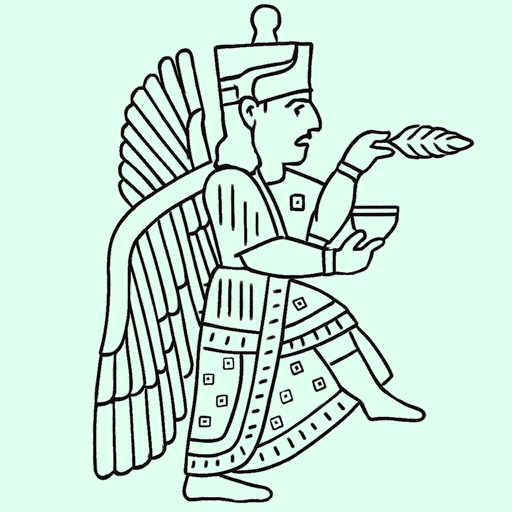
It is located approximately 5 kilometers east of Tušpa (Van Fortress). The site was established on a hill at the foothills of Mount Zimzim, in the northeastern part of the Van Plain. Inscriptions discovered at the site indicate that the city’s name was Rusahinili Qibani-kai (“Rusahinili in front of Mount Erek”). The fortress, estimated to be approximately 400 meters in length and 60–70 meters in width, is positioned in a significantly more defensible and commanding location over the plain when compared to Van Fortress. According to some researchers, it was constructed as a new capital to replace Tušpa. Although it is known to have been founded in the 7th century BCE, there is ongoing debate regarding the identity of its founder, Rusa II (son of Argišti), or Rusa III (son of Erimena). No evidence of earlier settlements has been identified on the hill, suggesting the site was not previously inhabited.
The first reference to the fortress appears in the 1874 work of G. V. Srvandztyants, who mentioned about the artifacts discovered there. The richness of the finds attracted the interest of researchers, and from that point onward, the site was frequently visited and excavated by numerous foreign archaeologists. Although initially thought to be an Assyrian settlement, Toprakkale holds significant importance as the site of the first archaeological excavations related to the Urartians. Many of the artifacts unearthed during early excavations are now exhibited in museums abroad. Systematic excavations by local researchers began in 1959, led by Afif Erzen.
Despite the abundance of small artifacts (especially made of bronze and ivory) found within the settlement only foundational remains of monumental structures have survived to the present day. Of the classic square-planned Haldi temple, located in the northern section of the fortress, only a few stone blocks remain. Other identifiable structures include storage buildings equipped with pithoi, and cisterns.


References:
Barnett, R. D. 1954. “The Excavations of the British Museum at Toprakkale, Near Van-Addenda,” Iraq 16.1, 3–22.
Erzen, A. 1967. “1959–1961 Yılları Arasında Toprakkale Araştırmaları,” in VI. Türk Tarih Kongresi, Ankara, 20–26.
Erzen, A. 1980. “Toprakkale 1976 Çalışmaları,” Türk Arkeoloji Dergisi 25.1, 45–58.
Genç, B. 2018. “Archaeology of Destruction: Toprakkale,” Iraq 80, 113–137.
Lehmann-Haupt, C. H. 1931. Armenien Einst und Jetzt Reisen und Forschungen II/2, B. Behrs Verlag/Friedrich Feddersen,Berlin and Leipzig.
Rassam, H. 1897. Asshur and the Land of Nimrod, Cincinnati: Curts and Jennings.
Zimansky, P. 2011. “Unutulan ve Tekrar Hayata Dönen Bir Krallık: Urartu Çalışmaları ve Literatürü,” in Urartu: Doğu’da Değişim / Transformation in the East, eds. K. Köroğlu & E. Konyar, İstanbul, 56–71.
Chantre, E. & C. Barry. 1881. Mission scientifique de Mr Ernest Chantre, sous-directeur du Museum de Lyon, dans la Haute Mésopotamie, le Kurdistan et le Caucase. V. Kurdistan, de Bitlis à Bayazid, France.
Image sources:
E. Chantre & C. Barry, 1881
H. Rassam, 1897
A. Erzen, 1967
P. Zimansky, 2011
B. Genç, 2018