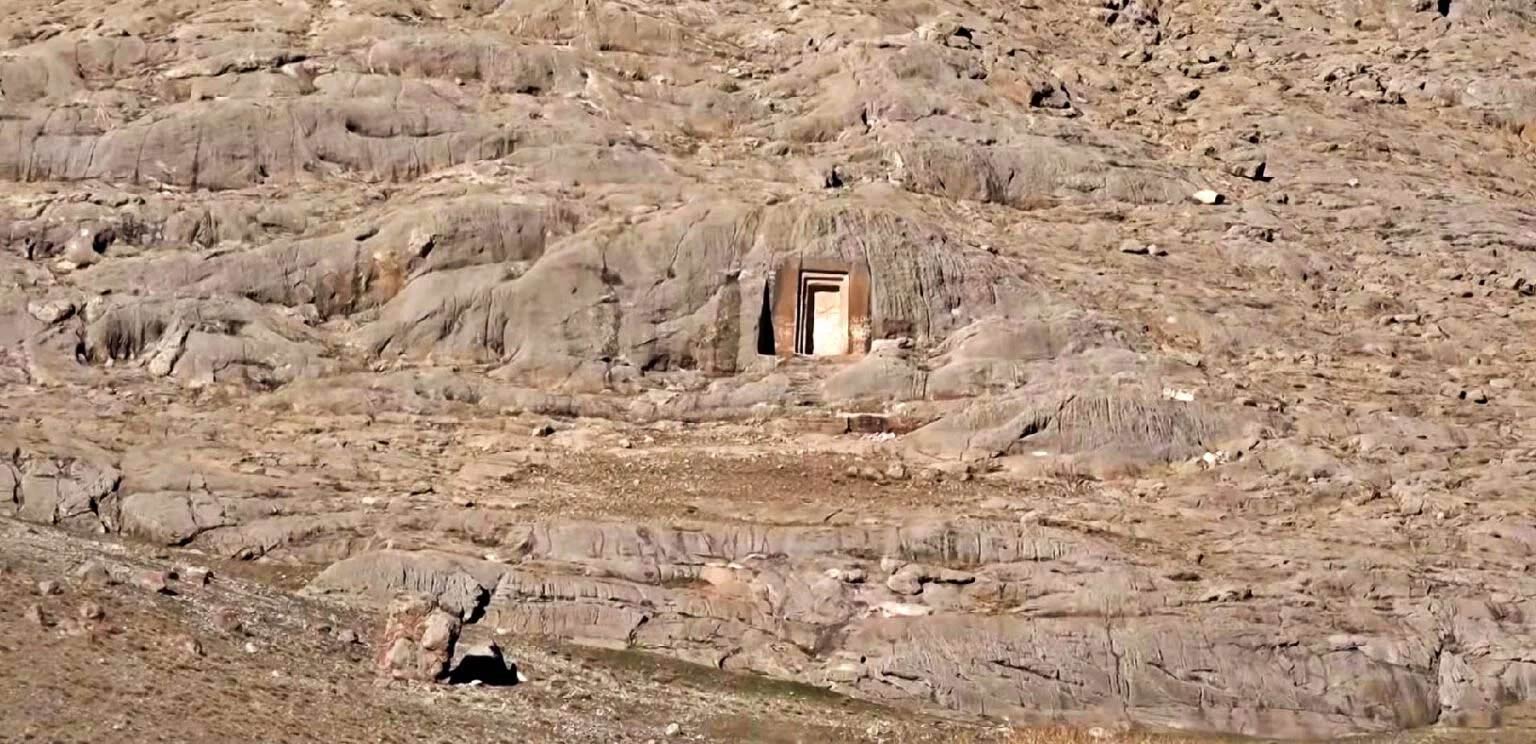
Yeşilalıç Kapı (Yeşilalıç Gate) is an Urartian open-air cult monument, located near the village of Yeşilalıç (formerly known as Pagan), approximately 60 km east of the city center of Van and 35 km south of the Özalp district center. The monument lies on the southern slopes of Mount Nazarabad, about 1,5 km southeast of the village as the crow flies. Although the area is now far from main roads, in the Urartian period it was situated on a major route connecting the Lake Van region to northwestern Iran.
Among locals, it is also known as the Stone Gate or Ashotakert (Ashot Gate)—the latter being the former name of the region. The monument was first discovered and its inscription copied by J. Wünsch, who visited the region in 1882, and it was first published by D. H. Müller in 1886.
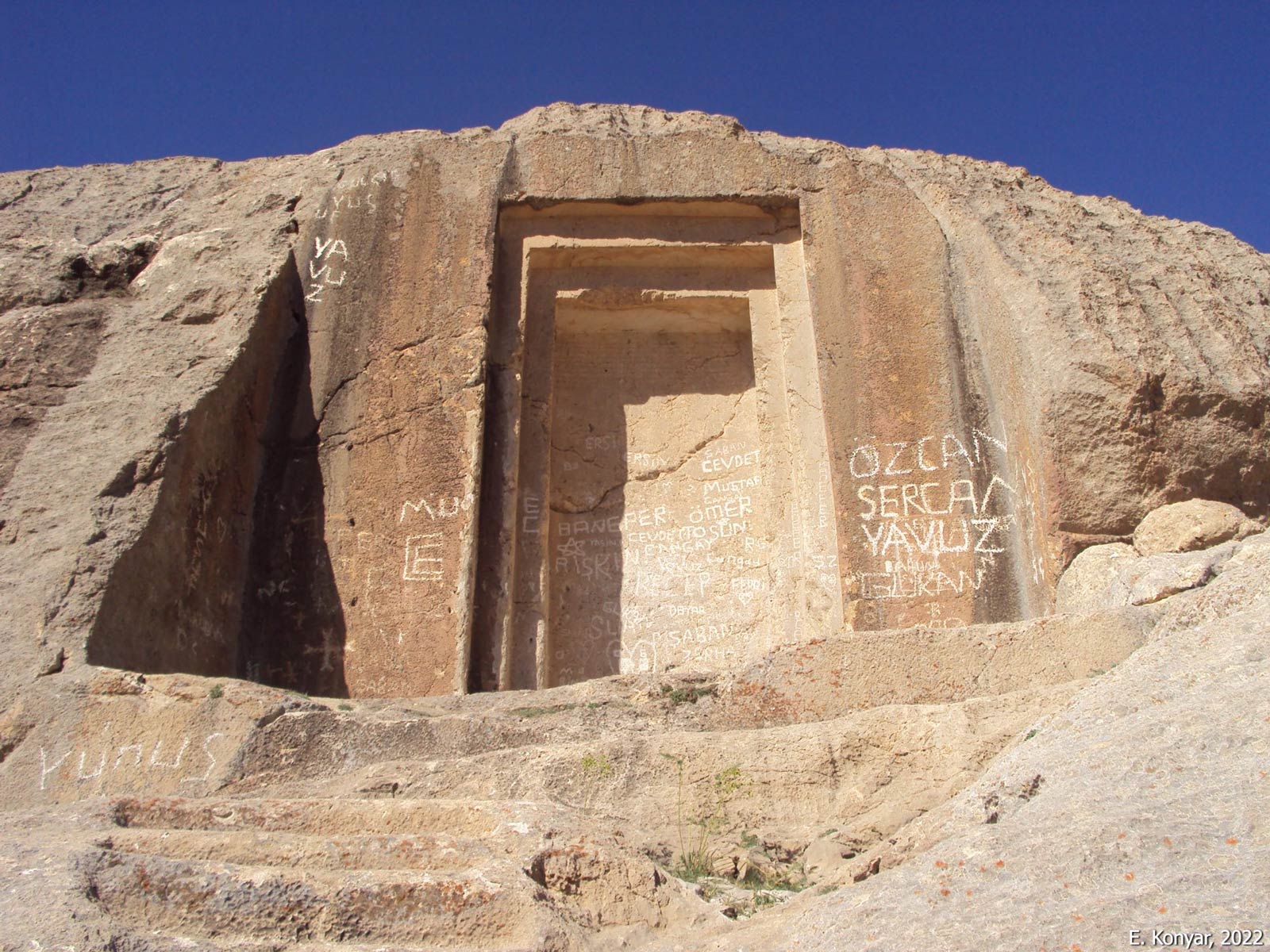
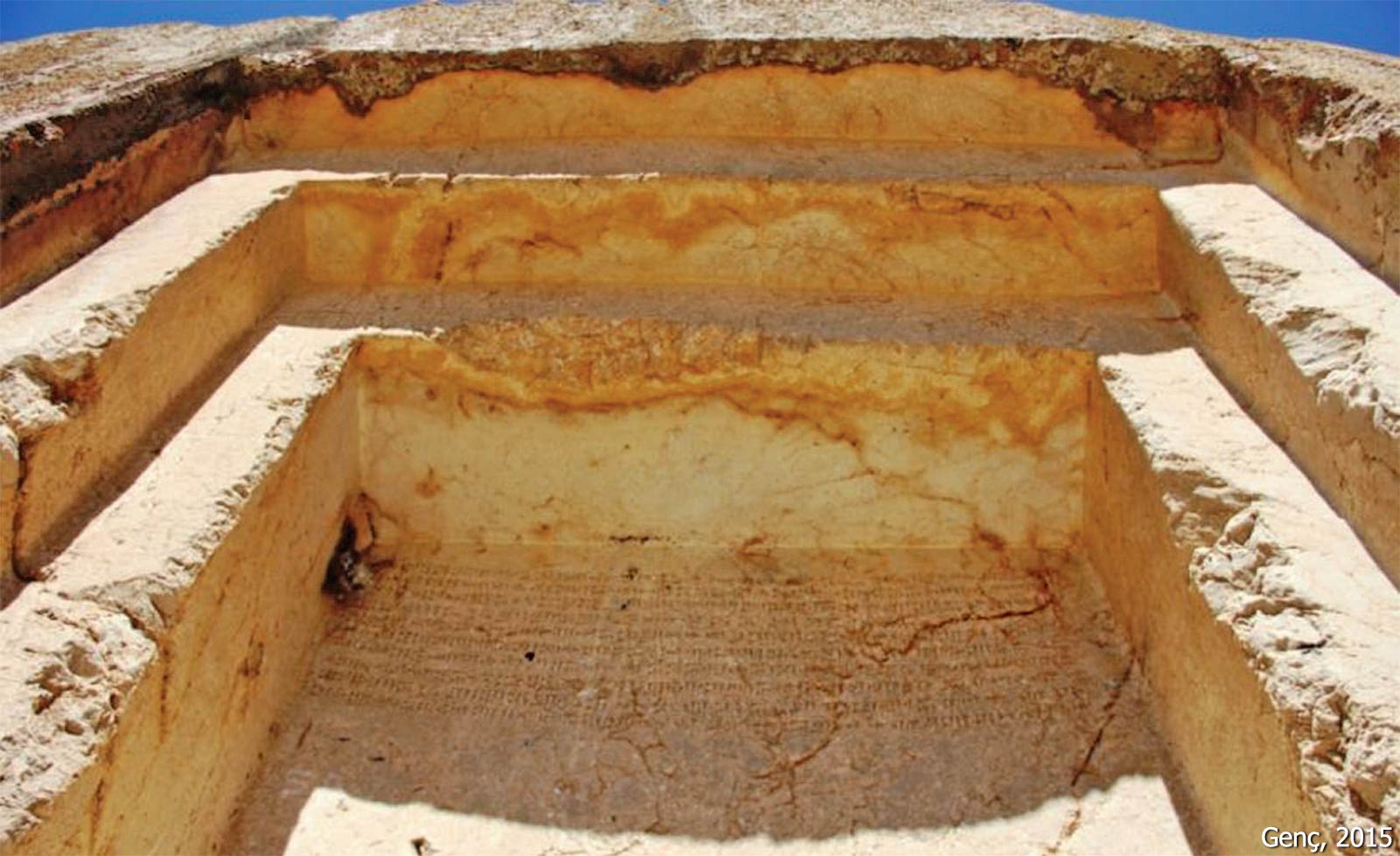
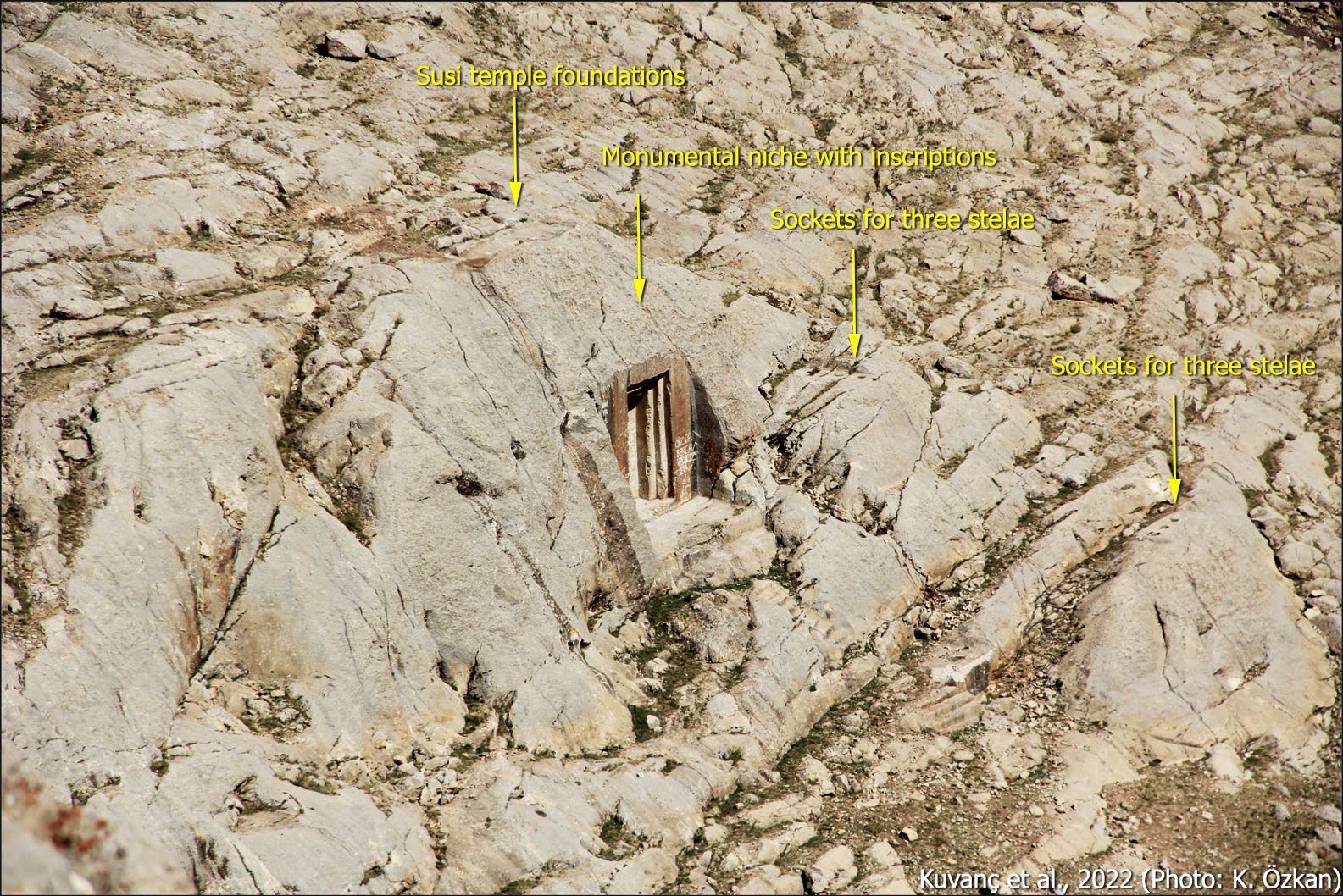
The monument is carved into the southern face of a rock outcrop, and in terms of shape and dimensions, it is similar to Meher Kapı, though it is about 1 meter taller. Inside the niche is a 10-line cuneiform inscription (A 3‑2), and just like at Meher Kapı, the same text is repeated twice. However, this inscription is significantly shorter. The inscription indicates that the monument was built during the joint reign of King Išpuini and his son Minua, in the last quarter of the 9th century BCE, same like Meher Kapı. Nevertheless, researchers believe that the Yeşilalıç monument predates Meher Kapı slightly.
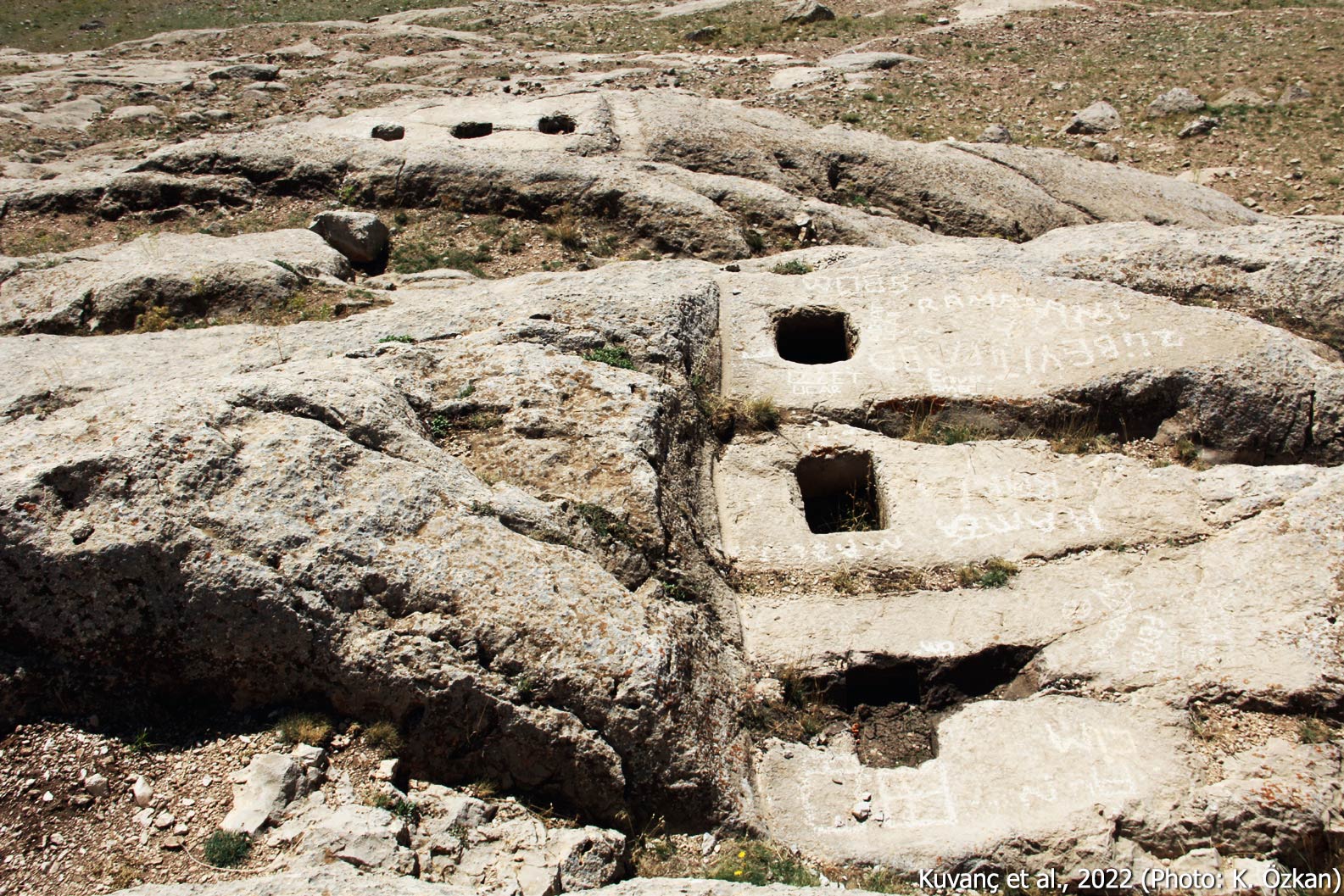
In front of the monument is a platform carved into the rock, accessible by a set of steps. On this platform are stele sockets arranged in two groups of three. Although no stelae have survived in the area, it is believed that these sockets once held stelae similar to the uninscribed ones found side-by-side at Altıntepe.
The word “susi”, which appears in the Yeşilalıç Kapı inscription, is generally associated with tower-type Urartian temples, leading researchers to link this monument to a nearby temple structure. One hypothesis suggests that such a temple may once have existed within the ruins of a small fortress located about 100 meters west of the monument. More recent studies propose that the foundation traces identified on the rock directly above Yeşilalıç Kapı could indicate the former presence of a temple structure at that location.
References:
Belli, O. 2000. “Van Bölgesi’nde Urartu Krallığı’na Ait Çivi Yazılı Anıtsal Kaya Kapıları,” in Türkiye Arkeolojisi ve İstanbul Üniversitesi (1932-1999), ed. O. Belli, Ankara, 386–393.
Genç, B. 2015. “The ‘Door of Ḫaldi’ in Pagan/Yeşilalıç and a New Approach on Susi Temple,” AJNES 9.2, 67–76.
Kuvanç, R., K. Işık B. Genç & E. Konyar. 2022. “Urartian Cult of the Stelae and New Discoveries at Aznavurtepe and Yeşilalıç (Ashotakert),” JANER 22, 55–88.
Sevin, V. & Belli, O. “Yeşilalıç Urartu Kutsal Alanı ve Kalesi,” Anadolu Araştırmaları 4-5, 367–393.
Image sources:
B. Genç, 2015
R. Kuvanç et al., 2022
Erkan Konyar, 2022