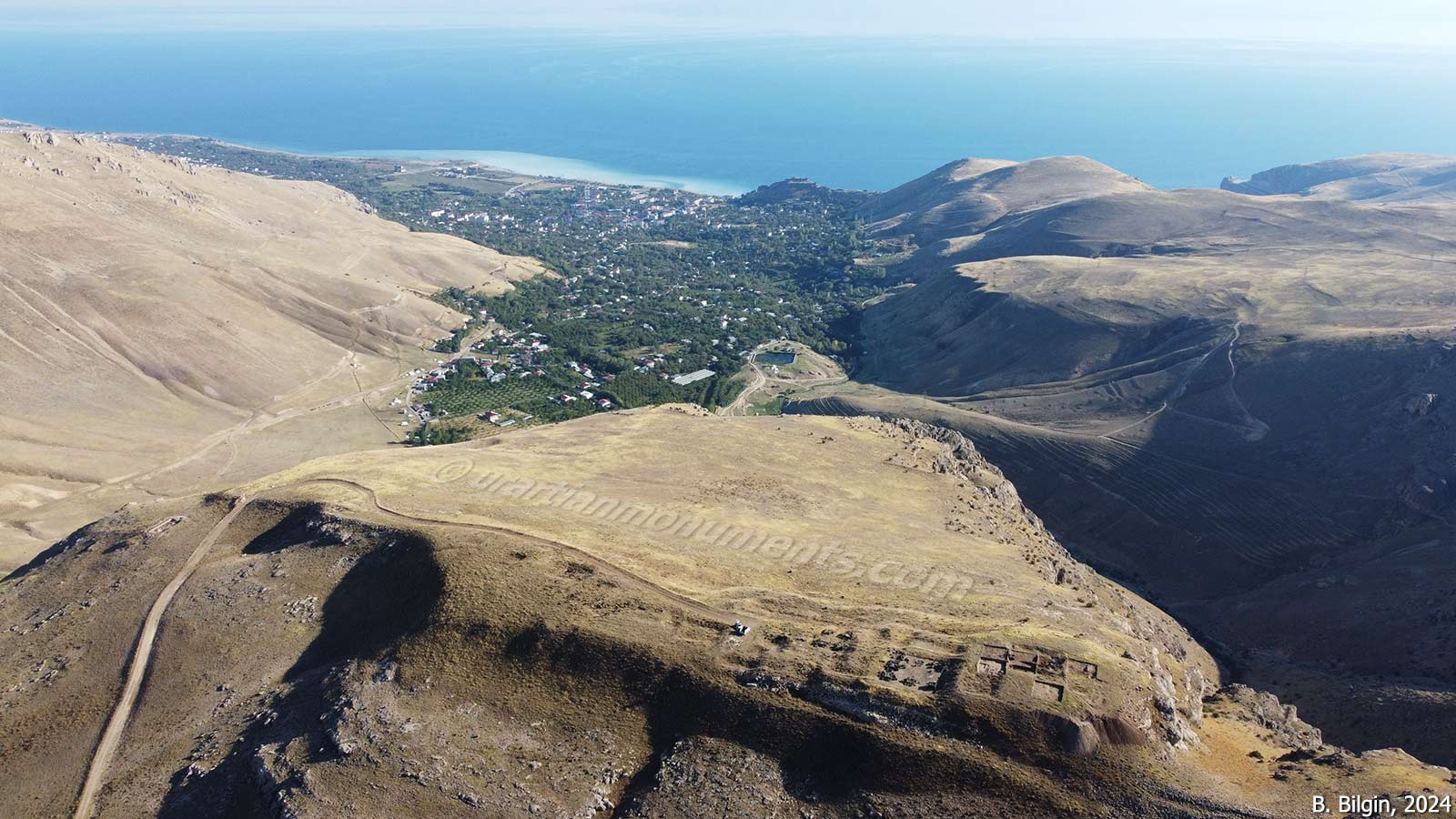
Kef Kalesi (Kef Fortress) was established on a hill 2,200 meters high, located behind the town of Adilcevaz, on the northern shore of Lake Van. It stands on the southwestern slopes of Mount Süphan, which was considered sacred by the Urartians. The fortress is about 550 meters above the shore, overlooks Lake Van and the Adilcevaz Plain. It is one of the fortress settlements built by the Urartian King Rusa II (685–645 BCE).
Two inscribed stone blocks found in the medieval Adilcevaz castle built near the lake shore are believed to have been taken from Kef Fortress and reused. The inscription (A 12-4), which is clearly belonged to a temple, that refers to the city as “Ḫaldiei URU KUR Ziuquni” (City of Haldi in Ziuquni Land).
In 1956, British researcher C. Burney was the first to conduct a surface survey of Kef Kalesi while studying Urartian castles around Lake Van. The first official excavations took place between 1964 and 1972, led by E. Bilgiç and B. Öğün. Regular excavations resumed again in 2021.
The castle is naturally protected on its east, west, and south sides by steep terrain, making access possible only from the north. The lower settlement was established in terraces on the southern side. There are remains of fortification walls surrounding both the castle and the lower settlement. Among the structures identified within the fortress are a multi-room palace complex and storage rooms with hundreds of pithoi (large earthenware jars used for goods container). Although a temple hasn’t been found yet, researchers believe there must have been one—just like in other similar Urartian settlements.
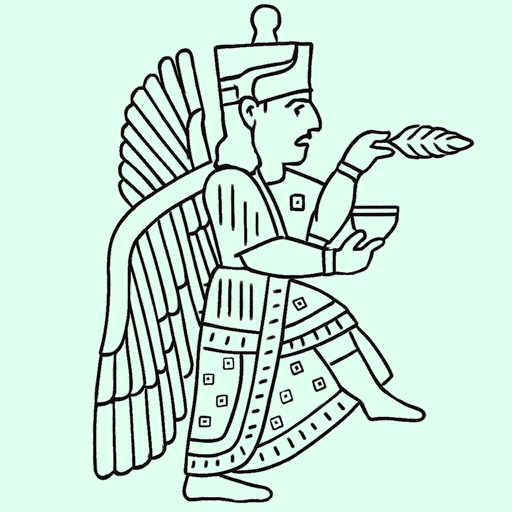
What makes Kef Kalesi unique are the carved stone blocks with reliefs, a style not seen in Urartian architecture before King Rusa II. Burney first discovered these reused blocks in Adilcevaz Castle. Six separate pieces appear to have been cut from a single large block measuring about 4 by 3.5 meters, showing a man (an Urartian god?) figure standing on a bull, believed to have been moved from Kef Kalesi.
Later excavations by Bilgiç and Öğün revealed a total of nine carved blocks, all with similar designs and inscriptions (see A 12-10). Each block is about 1.4 meters wide and 1.1 meters tall. All four sides are decorated with similar reliefs, and above them, a single-line cuneiform inscription runs around all four faces . The motifs and inscriptions on all the blocks are similar. The reliefs show winged human-like gods (or symbolic figures) standing on lions in front of fortified buildings with tall walls and windows. Eagles holding rabbits in their beaks are shown on top of the castle walls. According to the inscriptions, these blocks belonged to a building called “ašihusi“, built by King Rusa, son of Argišti (Rusa II).
The exact purpose of the ašihusi building is still debated, but it’s likely related to religious rituals or ceremonies. Some believe a large hall within the palace complex—featuring seven massive column bases built by basalt blocks—was the ašihusi building, and that the relief blocks once stood on top of these column bases.


References:
Bilgiç, E. & B. Öğün. 1964. “1964 Adilcevaz Kef Kalesi Kazıları / Excavations at Kef Kalesi Adilcevaz, 1964,” Anadolu 8, 65–124.
Burney, C. A. 1957. “Urartian Fortresses and Towns in the Van Region,” Anatolian Studies 7, 37–53.
Burney, C. A. & G. R. J. Lawson. 1958. “Urartian Reliefs at Adilcevaz, on Lake Van, and a Rock Relief from the Karasu, near Birecik,” Anatolian Studies 8, 211–218.
Coşkun, İ., O. Varol & E. Polat. 2023. “Adilcevaz Kef Kalesi Kazısı: Yeni Bulgular ve Değerlendirmeler,” OANNES 5.1, 253–274.
Salvini, M. 2008. Corpus Dei Testi Urartei Volume I – Le Iscrizioni Su Pietra E Roccia, Roma.
Image sources:
C. A. Burney & G. R. J. Lawson, 1958
H. Danışmaz, 2028
Bora Bilgin, 2024