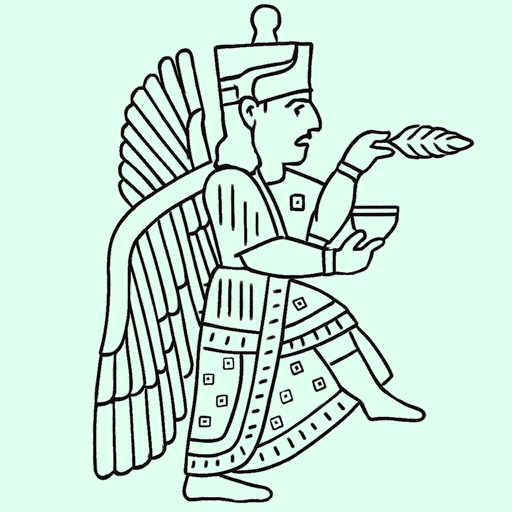
Ayanis (A 12-1)
The lengthy and well-preserved inscription of Rusa II was discovered in 1997 during excavations at Ayanis fortress. It is inscribed on basalt wall blocks of the façade and entry corridor of the tower-temple, which the inscription names “Foundations of Rusa in front of Mt. Eiduru” (mRušahinili KUREidurukai). The site of Ayanis is located approximately 35 km northwest of the city of Van, near the village of Ağartı (previously Ayanis), overlooking the lake shore.
The text is divided into eight inscribed areas, technically rows of blocks with 11 continuous lines each: I-II on the left side of the façade, III-IV on the left side of the corridor, V-VI on the right side of the corridor, and VII-VIII on the right side of the façade. The total length of the inscription is 15.93 m, and the height of the individual parts varies between 49.2 cm and 52.2 cm. Large sections have parallels in other inscriptions of Rusa II from Karmir Blur (A 12-2), Armavir (A 12-3), and Adilcevaz (A 12-4). The inscription is preserved in situ. A replica has been installed at the Van Museum.


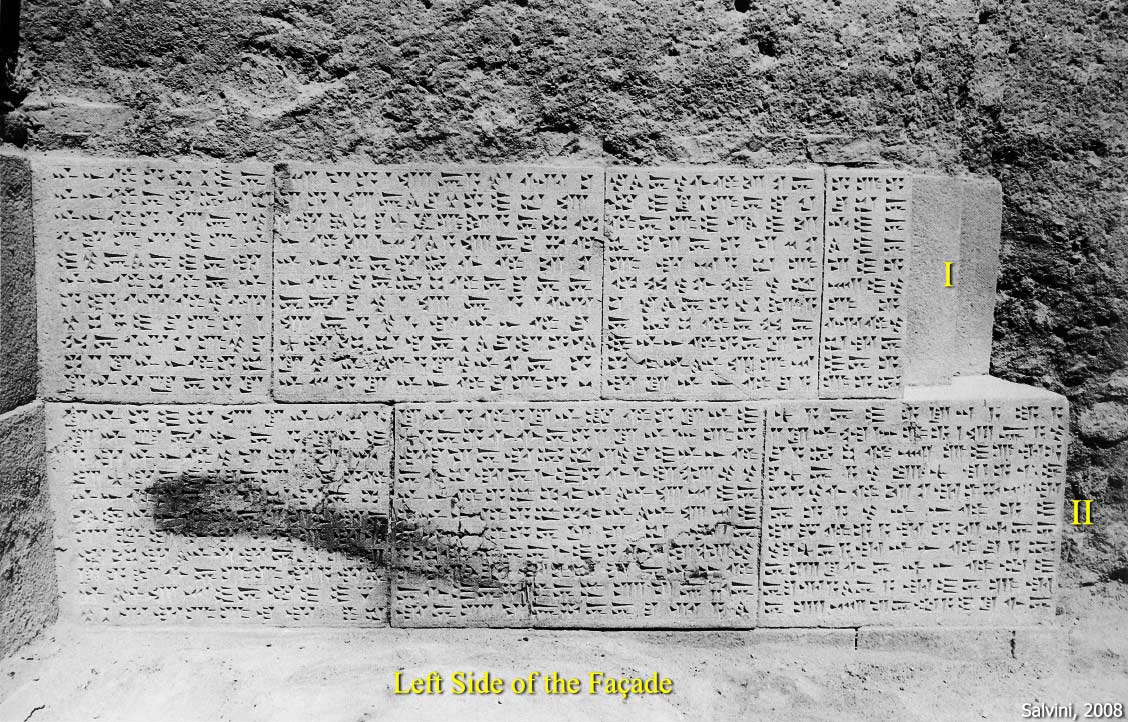


Transliteration (after eCUT):
Row I
i 1 dhal-di-e EN-ŠÚ i-ni su-si-e mru-sa-a-še mar-giš-te-hi-ni-še ši-di-iš-tú-ni e-ú-e
i 2 dhal-di-ni-li KÁ ba-du-si-e mru-sa-hi-na KURe-i-du-ru-ka-i ku-šú-ú-ni at-qa-na-du-ni
i 3 dhal-di-e mru-sa-a-še a-li qar-bi ma-nu qi-ú-ra-a-ni qu-ul-di-ni ú-i gi-i iš-ti-i-ni
i 4 ši-da-ú-ri i-ú dhal-di-iš-me MAN-tú-hi a-ru-ni na-ha-di LÚAD-si-ni e-si MAN-tú-hi-i-ni
i 5 i-še-er-hi-ni i-ni-li dhal-di-ni-li KÁ ši-di-iš-tú-ú-li ba-a-du-ú-si-i-e
i 6 dhal-di bi-di-ni dhal-di-na-ni KÁ bi-di-ni ma-ni-ni ul-gu-še pi-ṣu-še al-su-i-še
i 7 e-ia-ar-di-še ar-ni uš-ma-še mru-sa-a mar-giš-te-hi-ni-e KURšú-ra-a-ú-e
i 8 KURbi-a-i-na-ú-e mru-sa-a-še a-li dhal-di-na-ni KÁ bi-di-ni gu-ni ar-di-še
i 9 gu-ni ar-qa-ú-še ma-nu-li qu-du-la-ni šú-hi-na-ṣi-e MÁŠ.TUR dhal-di-e ni-ip-si-du-li-ni
i 10 GU4 2 UDU dhal-di-e ŠUM UDU ŠE dIM-a UDU ŠE dUTU-ni-e GU4.ÁB dʾa-ru-ú-ba-i-ni-e
i 11 UDU dhu-ṭu-ni-e UDU d30-e UDU dhal-di-na-ú-e TIL-LI UDU dhal-di-na-a-ú-e KÁ
Row II
ii 1 UDU de-i-du-ru UDU dba-ba-a UDU da-di-a UDU dsar-di-e UDU di-nu-a-ni-i-e UDU da-ia-a
ii 2 UDU dṭu-uš-pu-ni-a UDU di-nu-a-ni-e ši-ši-ni-e 2 UDU DINGIRMEŠ-ú-e 2 UDU DINGIR.NINMEŠ-ú-e mru-sa-a-še
ii 3 a-li dhal-di-še si-li-iš-ti-li ma-si-ni-li KÁ al-zi-na-i dhal-di-na-a KÁ bi-di su-ú-i-ú-li-e
ii 4 ta-nu-li-ni i-na-na-ni É.⸢URU4⸣ e-di-ni ši-du-li-ni mì-i e-ši-me-ṣi el-mu-še ma-nu-ni a-še ta-nu-li-e MÁŠ.TUR
ii 5 dhal-di-e ni-ip-si-du-li-ni GU4 dhal-di-e ŠUM GU4.ÁB dʾa-ru-ba-i-ni-e a-še ši-di-iš-tú-li pa-ha-zu-li
ii 6 MÁŠ.TUR d⸢hal-di⸣-e ni-ip-si-du-li-ni GU4 dhal-di-e ŠUM GU4.ÁB dʾa-ru-ba-i-ni-e a-še dhal-di-e-i
ii 7 É.BÁRA ṣi-bu-li a-gu-ú-li MÁŠ.TUR dhal-di-e ni-ip-si-du-li-ni ṣi-bur-di-e a-li-e iš-ti-ni-ni
ii 8 ka-qu-li ʾa-hu-li-ni qi-ú-ra-a qu-ul-di-ni-ni mì-i e-ši-me-ṣi el-mu-še ma-nu-ni a-li dhal-di-na-a KÁ
ii 9 UDU e-ra-ši-ni ú-ú-li a-li LÚpa-la-gi ma-nu-li ⸢áš⸣-du-li-ni dhal-di-ni É ku-ši-ni dhal-di-ka-i
ii 10 dʾa-ru-ba-i-ni-ka-i i-šá-ni ši-i-ni za-di-ni ŠUM Ési-ir-ha-ni-ni ma-ri-a-hi-ni a-li i-ni ú-li
ii 11 KURšú-ri-li ú-ú-la-li áš-du-li-ni Ési-ir-ha-ni-ni ma-ri-a-hi-ni Ésu-si-ni-ka-a-i ku-ši-ni
Row III
iii 1 áš-ha-áš-⸢ti⸣-i-ni dhal-di-e i-šá-ni ši-⸢i-ni⸣ za-⸢di⸣-ni ŠUM dhal-di-i-na-a
iii 2 KÁ-ka-i a-lu-si me-ri-ip-te ma-nu-li ši-i-ni me-ru-ni dhal-di-na-a
iii 3 KÁ-ka-i a-li ur-pu-li dhal-di-na KÁ šú-i-ni-ni zi-el-di ŠÀ mru-sa-a
iii 4 ar-du-li-ni a-še MAN mru-sa-hi-na-a ma-nu-li kam-ni-ni ŠUM-ṣi-ni-ni bar-za-a-ni
iii 5 zi-el-di-e MAN-e ar-du-li-ni a-li a-šú-li dhal-di-ni É ku-i-zi zi-el-di
iii 6 ši-la-ni-ni i-šá-ni ši-i-ni Ési-ir-ha-ni-ni ma-ni-ni na-hi-zi ši-al-a-di-e
iii 7 kam-ni su-ri ku-i-zi ši-la-ni-ni dhal-di-ni É mì-i a-i-ni-i zu-ma-gi-e
iii 8 áš-du-ú-ni a-li-e áš-du-li 2-am-di-ni mu-ú-ri a-ši-i-ni a-še ši-i-ú-li-e
iii 9 zu-ma-ṭi5-i-ni Ési-ir-ha-ni-ni a-li zu-ma-gi a-šú-li GU4 dhal-di-i-e ŠUM
iii 10 bar-za-ni zi-el-di MAN-e ar-du-li-ni ma-a-še ka-še ha-i-di-la-a-ni-ni a-li
iii 11 LÚa-ú-e-i-ṭi5-ni zu-ma-gi a-šú-li ku-ul-mu-li-ni a-li TIL-LIMEŠ ga-zu-li
Row IV
iv 1 te-er-du-li-ni GIŠši-si-ni bi-di-a-še GIŠši-i-si-e šú-ú-li-e a-še e-si ma-nu-ú-li i-šá-hi-⸢ni⸣
iv 2 te-er-du-li-ni a-li i-ni ú-li TIL-LI te-er-du-li-ni Éa-du-nu-si-ni mru-sa-a-še a-⸢li⸣
iv 3 a-lu-še KÙ TUKUL TIL-LI SIKIL dhal-di-na-ni KÁ-ni ha-ú-li-e NA₄ ʾa-hu-li-ni a-li a-še su-nu-e
iv 4 i-ru-i-du-li TUKULMEŠ GIŠMEŠ SIMEŠ ši-e-du-li-ni GÍBIL qi-ú-ra-a qu-ul-di-ni-ni a-li KÙ iš-ti-⸢ni⸣
iv 5 ma-nu-li te-er-du-li-ni Éa-du-nu-si-ni mru-sa-a-še a-li a-li-e dhal-di-i-ni-e ⸢É⸣
iv 6 áš-du-li ha-ap-ti-ni-e KIN ma-nu-ni e-me tar-ni GÍR áš-ka-ṭi5-ni-e ši-e-du-li-i-ni mì-⸢i⸣
iv 7 e-ši-me-ṣi el-mu-še ma-nu-ni i-ni ú-li KÚR GÀR a-še a-li ú-i uš-ta-a-ku-ni áš-du-li-⸢ni⸣
iv 8 ši-e-du-li-ni mì-i e-ši-me-ṣi el-mu-še ma-nu-ni dhal-di-ni-i a-ma-ni i-gi-di ip-hi-⸢e⸣
iv 9 dhal-di-ni-i ba-du-si-ni i-ú ur-zi-e ʾa-hu-li-ni qi-ú-ra-a qu-ul-di-ni-i-ni mì-⸢i⸣
iv 10 e-ši-me-ṣi el-mu-še ma-nu-ni mru-sa-a-še a-li mì-i a-i-še-i ha-lu-li-e gu-di-ba-a-di KÚ-⸢ni⸣
iv 11 mru-sa-hi-na-a KURe-i-du-ru-ka-i mru-sa-i-ni-e É me-er-gi-i URUba-ši-e-hi-na-a
Row V
v 1 [mx]-⸢ra?⸣-ra-i-ni URUTUR URUlu-ia-ni-hi-na-a URUú-za-a-i-ni a-še URUú-la-a
v 2 ⸢É⸣.GAL URUTUR É iš-pi-lip-ri a-ha-li-ni URUar-du-ru-ú URUa-la-a-ú-e
v 3 [URU?].⸢am?-bi⸣-e-hi-na-a mpa-bi-e-hi-ni-ni URUTUR mmì-nu-ú-a-hi-na-a
v 4 [m]⸢ti⸣-ti-a-hi-⸢na⸣-a URUa-ni-iš-tú-ni-e URUú-za-ra-ú-e URUar-ma-ṭi5-ú-ni-e
v 5 [a?]-⸢ri⸣ dhal-di-na-a KÁ MAN-i ŠUM za-du-ú-še a-še ŠUM qu-tú-me-na-ú-e
v 6 ⸢ma?⸣-nu-li MÁŠ.TUR dhal-di-e ni-ip-si-du-li-ni UDU dhal-di-e ŠUM UDU dIM-a
v 7 [UDU] ⸢d⸣UTU-ni-e UDU dʾa-ru-ba-i-ni-e UDU dhal-di-na-ú-e TIL-LI
v 8 [UDU] ⸢d⸣hal-di-na-ú-e KÁ UDU dú-a UDU DINGIRMEŠ-ú-e at-qa-na-na-ú-e
v 9 [ma?]-ni-ni GIŠGEŠTIN ha-lu-li-e kam-ni-ni É i-za-na-ni-ni Ì qar-me-hi
v 10 ⸢GEŠTIN⸣-na at-hi-la-ti-i-ni áš-hi-la-ti-ni dhal-di-e dhal-di-na-a KÁ
v 11 i-še-er-hi-ni ha-lu-li ú-i-la-ti-ni a-lu-še-e gu-di-ba-di a-tú-li-e
Translation:
Row I
“(1) For the god Haldi, his Lord, Rusa, son of Argišti, built this susi temple and he created and dedicated a ʹgate of the god Haldiʹ to perfection in the city “Rusahinili in front of Mount Eiduru” for the god Haldi. (3b) Rusa says: the rock was (bare and) the earth was deserted, nothing had (ever) been built there. (4b) When the god Haldi gave me the kingship I sat down on the fatherly throne of kingship. Then I built this gate of the god Haldi to perfection. (6) On behalf of the god Haldi, on behalf of the gate of the god Haldi may there be life, joy, greatness and strength of a lion, favor (and) protection for Rusa, son of Argišti, for the regions (and) for the Bia lands. (8b) Rusa says: on behalf of the gate of the god Haldi may there be indeed a ritual (and) indeed arqauše. (9) In case of a new foundation(?), they shall sacrifice a kid for the god Haldi, they shall sacrifice an ox (and) 2 sheep for the god Haldi, a fat sheep for the Weather-God, a fat sheep for the Sun-God, a cow for the godess ʾArubaini, a sheep for the god Huṭuni, a sheep for the Moon-god, a sheep for the weapons of the god Haldi, a sheep for the gate of the god Haldi,
Row II
(1) a sheep for the god Eiduru, a sheep for the goddess Baba, a sheep for the goddess Adia, a sheep for the goddess Inuani, a sheep for the goddess Aia, a sheep for the goddess Ṭušpue, a sheep for the goddess Inuani for the second time; 2 sheep for the gods, 2 sheep for the goddesses. (2b) Rusa says: The god Haldi will silist his gate alzinai. At the side of the gate of the god Hal[di] they (or: he/one) shall make thi[s foundation]. Furthermore they (or: he/one) shall build it and ešimeṣi (and) elmuše will be (the translation of the sentence is uncertain). (4b) When they lay them out, they shall sacrifice a kid for the god Haldi, they shall sacrifice an ox for the god Haldi, (and) a cow for the goddess ʾArubaini. (5b) when they build a pahazuli, they shall sacrifice a kid for the god Haldi, they shall sacrifice an ox for the god Haldi, (and) a cow for the goddess ʾArubaini. (6b) when they dig the sanctuary of the god Haldi ṣibuli they shall sacrifice a kid for the god Haldi (and?) the ṣiburde which is here (and) the kaquli they shall gather from the deserted land and ešimeṣi (and) elmuše will be. (8b) a sheep that(?) at the gate of the god Haldi erašini, they shall incorporate(?) another one(?) who(?) should be a palagi man (and) the house of the god Haldi kušini in front of the god Haldi, in front of the goddess ʾArubaini.
(For the text between Row II 10b and Row VI 4a a coherent translation cannot be given since the meaning of many words as well as the grammatical structure remains obscure).
Row VI
vi 1 ka-am-na-hi-e NA₄ ʾa-hu-li-i-ni a-lu-še ši-šú-ha-ni a-tú-li-i-e
vi 2 MÁŠ.TUR dhal-di-e ni-ip-si-di-la-ni-ni GU4 dhal-di-e ŠUM bar-za-ni zi-el-di MAN-e
vi 3 ar-du-li-ni ka-še URUše-ú-i-la-ni-ni a-še za-ú-ri-e a-mu-li-ni áš-hu-li-ni kam-na-hi
vi 4 dhal-di-na-a KÁ mru-sa-hi-na-a-ni zi-el-di-e MAN-e ú-ú-li-i-ni mru-sa-a-še
vi 5 mar-giš-te-hi-ni-še a-li i-ni e-si qar-bi ma-nu qi-ú-ra-ni qu-ul-di-ni ma-nu ú-i gi-e-i
vi 6 iš-ti-ni ši-da-ú-ri-e dhal-di-ni-ni ba-ú-ši-i-ni i-e-še i-ni É.BÁRA ši-di-iš-tú-bi
vi 7 e-ʾa É.GAL ba-du-si-e ši-di-iš-tú-ú-bi
vi 8 GIŠGEŠTIN GIŠza-ri-e šú-hi te-ru-ú-bi GÁN GIŠÚ.ŠE URU šú-hi iš-ti-ni šá-tú-ú-bi tar-gi-i-ni-li
vi 9 ar-ni-ú-ši-ni-li iš-ti-ni za-du-bi te-ru-ú-bi ti-i-ni mru-sa-hi-ni-li KURe-i-du-ru-ka-i
vi 10 mru-sa-a-še mar-giš-te-hi-ni-še a-li pa-ru-ú-bi LÚ MUNUSlu-<tú-ni> KURlu-lu-i-na-ni KURaš-šur-ri-ni
vi 11 KURtar-gu-ni KURe-ti-ú-ni-ni KURtab-la-ni KURqa-i-na-ru-ú KURha-a-te-e KURmu-uš-ki-ni KURṣi-lu-qu-ni-ni
Row VII
vii 1 za-du-ú-bi-e LÚ-i-a-ni i-nu-ki-e É.GAL-a e-ú-e URUMEŠ a-li-li
vii 2 i-nu-ki-e É.GAL-a za-du-ú-bi al-zi-na-i i-nu-ki-e É.GAL-a
vii 3 a-bi-li-du-ú-bi mì-i a-i-še-i e-di-ni su-ṭi5-a-ni mì-i-e i-bi-ri-ia-ni
vii 4 mì-i gi-e-i i-na-a-ni ba-ú-ši-na-a-ni še-pu-ia-ar-di-a-ni
vii 5 mru-sa-a-še mar-giš-te-hi-ni-še a-li dhal-di-iš-me uš-ha-nu-ni
vii 6 hu-ṭu-tú-hi gu-nu-še e-ú-e LÚip-šú-ú-še dhal-di-a iš-ti-ni-e
vii 7 i-na-ni-li ar-ni-ú-ši-ni-li-e za-du-ú-li-e
vii 8 dhal-di-ni-ni al-su-i-ši-i-ni mru-sa-a-ni mar-giš-te-hi-e
vii 9 MAN DAN-NU MAN al-su-i-ni-e MAN KURšú-ú-ra-a-ú-e
vii 10 MAN KURbi-a-i-na-ú-e MAN MANMEŠ-ú-e a-lu-si URUṭu-uš-pa-e URU
vii 11 dhal-di-ni-ni ba-ú-ši-ni mru-sa-a-še mar-giš-te-hi-ni-še a-li
Row VIII
viii 1 MAN-e a-li i-si i-ku-ka-ni e-di-ni ma-nu-li mì-i gi-i i-na-a-ni
viii 2 ba-ú-ši-na-ni KIN i-si-ia-ni mì-i gi-i še-pu-ia-ar-di-a-ni mì-i pu-hi-a-ni
viii 3 gu-ni i-e-še ti-ú-bi gu-ni za-du-ú-bi-e mru-sa-a-še mar-giš-te-hi-ni-še
viii 4 a-li a-lu-še i-ni DUB-te-e dhal-di-na-ni KÁ tú-li-i-e a-lu-ú-še
viii 5 pi-tú-li-e a-lu-še še-er-du-li-e a-lu-še e-si-ni su-ú-i-du-li-e
viii 6 a-lu-še ti-ú-li-e i-e-še za-du-ú-bi a-i KURbi-a-i-ni-še a-i
viii 7 KURlu-lu-i-ni-še a-lu-še šú-si-e ti-ni-ni tú-li-i-e ma-a-si-e
viii 8 ti-i-ni te-li-i-e tú-ri-ni-ni dhal-di-še dIM-še dUTU-ni-še
viii 9 DINGIRMEŠ-še ma-a-ni ti-i-ni ar-mu-zi-i ar-mu-zi-gi ar-mu-zi
viii 10 dUTU-ni pi-e-i mì-i ar-hi-e ú-ru-li-a-ni mì-i i-na-i-ni-e
viii 11 mì-i LÚna-ra-a a-ú-i-e ú-lu-ú-li-e
Row VI
(4b) Rusa, son of Argišti says: this place was rock, the land was deserted, nothing has ever been built here. (6b) Through the command of the god Haldi I built this temple and I built this fortress to perfection. (8) I planted a vineyard (and) a new fruit orchard, a grain field (and)] I founded a new city here, (its) name is Rusahinili in front of Mount Eiduru (Rusahinili Eidurukai). (10) Rusa, son of Argišti, says: I deported men (and) women from the enemy countries, from the land Assur (Assyria), from the land Targuni, from the land Etiuni, from the land Tabla (Tabal), from the land Qainaru, from the land Hatti (i.e. the Neo-Hittite states), from the land Muški, from the land Ṣiliquni.
Row VII
(1) I [ma]de this fortress by the men and these settlements that are in this fortress and I made alzinai this fortress, I added . . . (untranslatable). (4b) Rusa, son of Argišti, says: Haldi bestowed me with bravery(?), pugnacity and lordship(?). For the god Haldi I accomplished these deeds. Through the greatness of the god Haldi (I am) Rusa, son of Argišti, strong king, great king, king of the lands, king of the Bia lands, king of kings, lord of Ṭušpa-City. (11) Through the command of the god Haldi Rusa, son of Argišti, says:
Row VIII
(1) A king, who might be later on in this same place(?), shall neither disregard(?) anything of these orders nor shall he šepuiar the work (or: a message) nor shall he puh. (3) Indeed I spoke, indeed I did. Rusa, son of Argišti, says: (as for the one) who destroys this inscription of the gate of the god Haldi, (as for the one) who damages it, (as for the one) who hides(?) it, (as for the one) who removes it from (its) place, (as for the one) who says ʹI made itʹ, may it be a Biaean (Urartean) or a foreigner, (as for the one) who destroys my name and puts his (own) name, may the god Haldi, the Weather-God, the Sun-god, (and all) the gods annihilate him, his offspring and his offspringʹs offspring under the sun . . . (rest of the curse formula untranslatable).
References:
Salvini, M. 2001. “The Inscriptions of Ayanis. Monumental Stone Inscriptions,” in Ayanis I. Ten Year’s Excavations in Rusahinili Eiduru-kai (Documenta Asiana 6), eds. A. Çilingiroğlu & M. Salvini, 254–271.
Salvini, M. 2008–2018. Corpus dei Testi Urartei, v. 1 pp. 565–570, v. 3 pp. 338–343, v. 5 pp. 317–322.
eCUT – Electronic Corpus of Urartian Texts (https://oracc.museum.upenn.edu/ecut/Q007100).
Images:
M. Salvini, 2001
Ayanis (A 12-9)
A foundation inscription of the city of “Rusahinili in front of Mt. Eiduru” (Rusahinili KUREidurukai) was found during the 1993 excavation campaign in front of the city gate of Ayanis. The inscribed block is 44 cm high, 59 cm wide, and 15 cm thick and is on display in the Van Museum. The text corresponds, with some variations, to section A 12-1 VI 4–9, including the blank section, which was evidently intended to include another important architectural achievement.

Transliteration (after eCUT):
1 dhal-di-ni-ni al-su-i-ši-ni mru-sa-a-še
2 mar-giš-te-hi-ni-še i-ni É.GAL ba-du-si-i-e
3 ši-di-iš-tú-ni KURe-i-du-ru-ka-i mru-sa-a-še
4 a-li NA4qar-bi ma-nu ú-i gi-i iš-ti-ni
5 ši-da-ú-ri i-e-še e-ʾa É.BÁRA e-ʾa É.GAL
6 ba-du-si-i-e ši-di-iš-tú-ú-bi
7 (vacat)
8 GIŠul-di GIŠza-a-ri šú-ú-hi te-ru-ú-bi URU šú-ú-hi
9 iš-ti-ni ši-di-iš-tú-ú-bi tar-gi-i-ni-li
10 ar-ni-ú-ši-ni-li iš-ti-ni za-du-bi te-ru-bi
11 ti-ni mru-sa-hi-ni-li dhal-di-ni-ni al-su-i-ši-ni
12 mru-sa-a-ni mar-giš-te-hi MAN DAN-NU MAN al-su-i-ni
13 MAN KURbi-a-i-na-u-e a-lu-si URUṭu-uš-pa-e URU
14 mru-sa-a-še a-li a-lu-še ti-ni-ni tú-li-e ma-a-si
15 ti-ni te-li-e tú-ri-ni-ni dhal-di-še dIM-še dUTU-še
Translation:
“(1) Through the greatness of the god Haldi Rusa, son of Argišti, built this fortress to perfection in front of Mount Eiduru. (3b) Rusa says: it was rock, nothing had been (ever) built here (before). (5b) I built both a temple and a fortress to perfection. (6b) (uninscribed) (8) I planted a vineyard (and) a new orchard, (and) I built a new city here. (9b) I accomplished mighty deeds here. I gave it the name Rusahinili. (11b) Through the greatness of the god Haldi (I am) Rusa, son of Argišti, strong king, great king, king of the Bia lands, lord of Ṭušpa-City. (14) Rusa says: (as for the one) who destroys (my) name and puts his (own) name (there), may the god Haldi, the Weather-God (and) the Sun-God destroy him!”
References:
Çilingiroğlu, A. & M. Salvini. 1995. “Rusaḫinili in Front of Mount Eiduru: The Urartian Fortress of Ayanis (7th century B.C.),” SMEA 35, 111–124.
Salvini, M. 2001. “The Inscriptions of Ayanis. Monumental Stone Inscriptions,” in Ayanis I. Ten Year’s Excavations in Rusahinili Eiduru-kai (Documenta Asiana 6), eds. A. Çilingiroğlu & M. Salvini, 254–271.
Salvini, M. 2008–2018. Corpus dei Testi Urartei, v. 1 pp. 581–582, v. 3 p. 359, v. 5 pp. 334–335.
eCUT – Electronic Corpus of Urartian Texts (https://oracc.museum.upenn.edu/ecut/Q007108).
CTU A 12-9 = KUKN 421b
Images:
Bora Bilgin, 2024