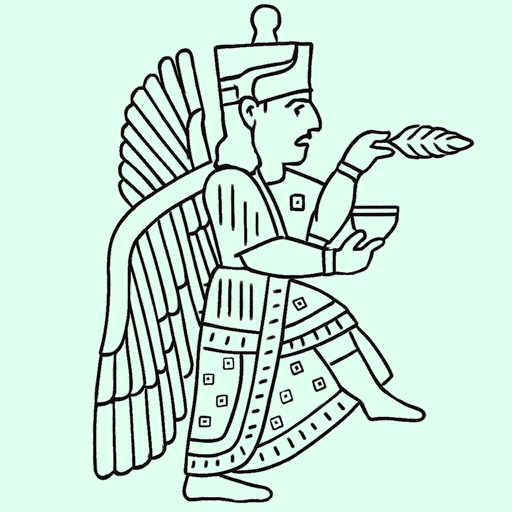
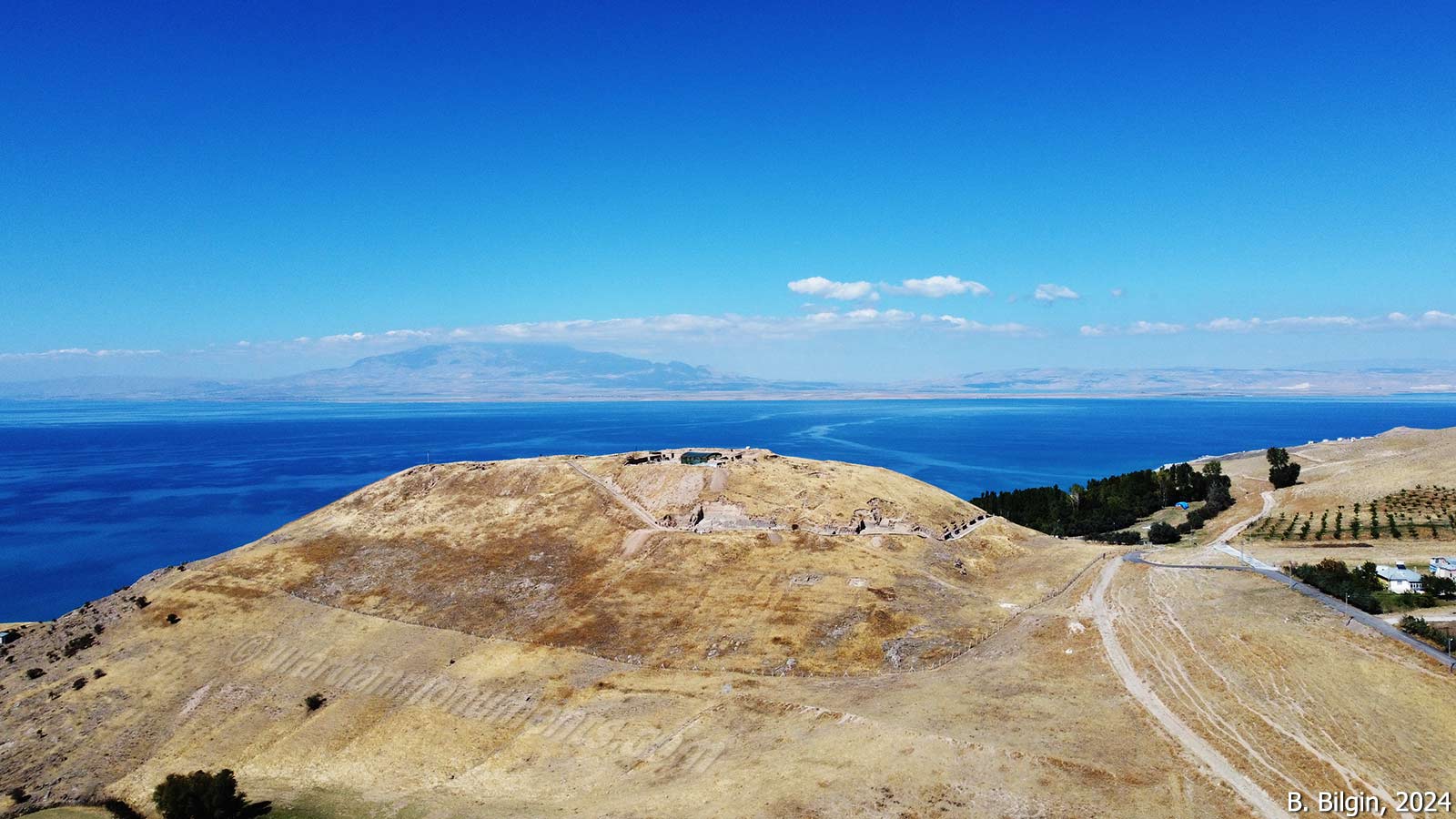
Ayanis is a fortress settlement built atop a hill on the shore of Lake Van, located approximately 38 kilometers north of the Urartian capital, Tušpa. It lies along the route that connects Tušpa to the northern shore of Lake Van. The fortress was one of the defensive structures commissioned by Urartian King Rusa II (son of Argišti II) to protect the capital from potential attacks originating from the north.
Both inscriptions found at the site and archaeological research confirm that there had been no prior settlement on this hill before the construction of the fortress. The fortress and its surrounding lower town were established at the end of first quarter of the 7th century BCE, possibly around 673/2 BCE. Inscriptions discovered at the site indicate that the fortress, which faces the majestic Mount Süphan rising across the lake, was named “Rusahinili Eiduru-kai,” meaning “The City of Rusa Opposite Mount Süphan.”
The lifespan of Ayanis Fortress was relatively short. It is believed that around the middle of the 7th century BCE, possibly around BCE 653/50, a destructive earthquake followed by a fire led to the collapse and the abandonment of the citadel. However, the structures and artifacts buried beneath the ruins have remained remarkably well-preserved, significantly contributing to the understanding of Urartian history, architecture, and culture.
Excavations at Ayanis were first initiated by K. Çilingiroğlu in 1989 and have been conducted continuously under the direction of M. Işıklı since 2013. Among the structures uncovered in the excavations, the temple complex — which includes a temple dedicated to Haldi — particularly stands out alongside the fortification walls, residential buildings, and storage structures.


The Temple Complex
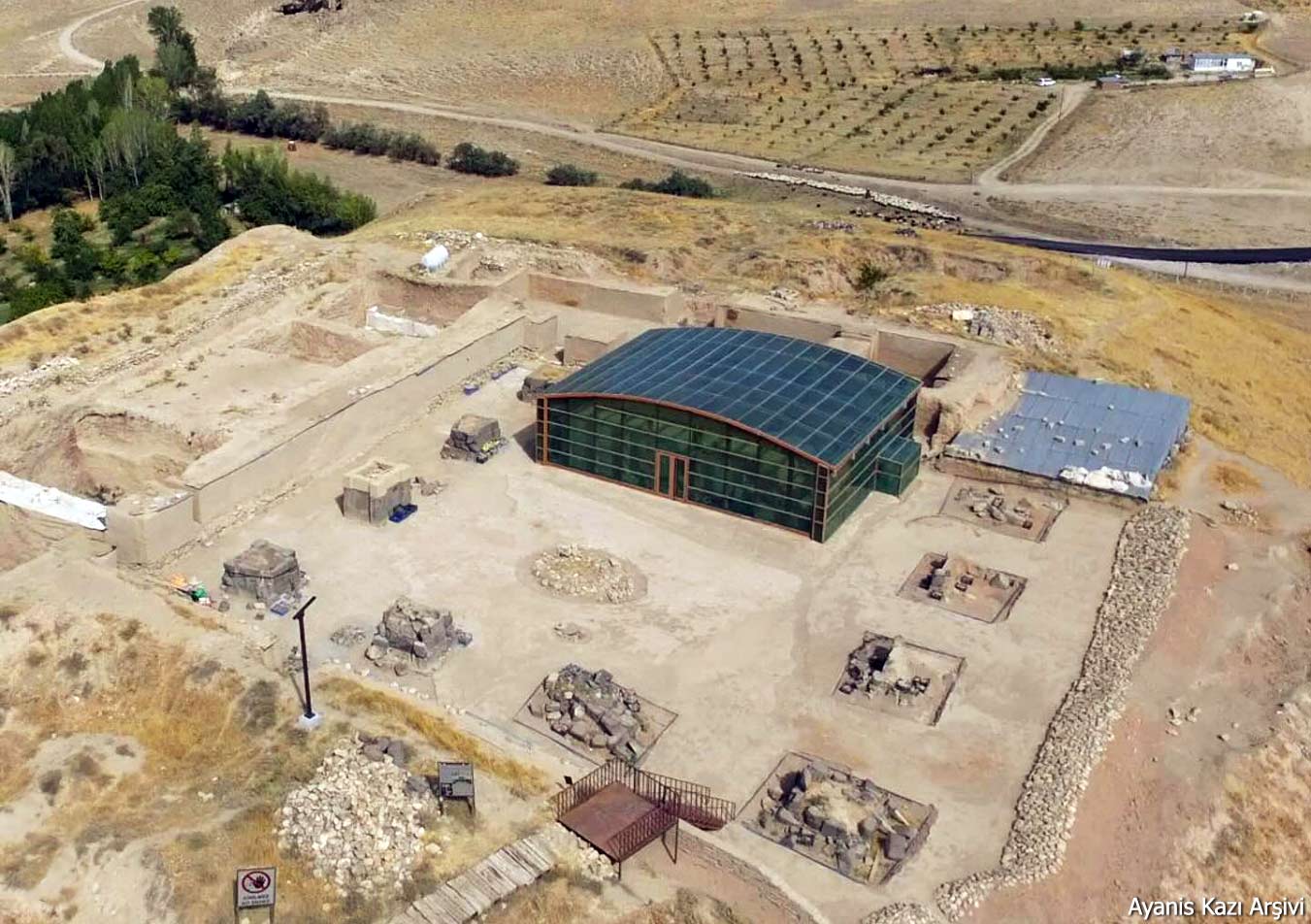
The temple complex, constructed at the highest point of the hill, consists of four distinct architectural units: the “Temple Courtyard,” the “Temple of Haldi,” the “Podium Hall,” and the “Eastern Pillared Hall.” The temple courtyard, measuring 30 x 30 meters, is enclosed by mudbrick walls and is surrounded on all four sides by twelve large piers, which likely once supported a mezzanine level. Adjoined to the eastern wall of the courtyard is the core temple (susi), identified as the Temple of Haldi, measuring 12.75 x 12.75 meters. It is the best-preserved Urartian temple known to date. On the outer walls of the temple, constructed with basalt stone blocks, and on either side of the entrance doorway, a 16-meter-long inscription is present (see A 12‑1). The inner walls, made of andesite stones, are decorated with mythological figures carved using the intaglio technique. The floor is paved with alabaster (water marble) slabs. In front of the eastern wall, directly opposite the entrance door, there is a platform also made of alabaster, decorated with motifs.
A passage located to the north of the eastern wall of the courtyard opens into another hall built behind the eastern wall, measuring 8 x 22 meters. Due to the presence of a podium made of alabaster and decorated with mythological figures, similar to the one inside the temple, this hall is referred to as the “Podium Hall.” Behind the southern wall of this hall, there is another smaller room, measuring 7.5 x 4.5 meters, also paved with alabaster.
Opposite a door/passage located in the eastern wall of the Podium Hall, another pier-supported structure has been identified. This structure, supported by 14 large piers similar to those in the temple courtyard, contains storage areas believed to be connected with the temple complex.


References:
Aras, O. & S. Köse. 2021. “Ayanis’te Urartulu Tanrıların Kutsal Alanları: Tapınak Kompleksi,” in Tanrı Eiduru’nun Gölgesinde bir Urartu Kenti Ayanis, eds. M. Işıklı & A. A. Aras, İstanbul, 79–106.
Çifçi, A. 2021. “The Economy of the Urartian Kingdom,” in Archaeology and History of Urartu (Biainili), ed. G. R. Tsetskhladze, Colloquia Antiqua 28, Leuven, 111–144.
Çilingiroğlu, A. 2003. “Recent Excavations at the Urartian Fortress of Ayanis,” in Archaeology in the Borderlands:Investigations in Caucasia and Beyond, eds. A. T. Smith & K. S. Rubinson, Los Angeles, 197–210.
Çilingiroğlu, A. 2011. “Ayanis: An Iron Age Site in the East,” in The Oxford Handbook of Ancient Anatolia 10,000-323 B.C.E., eds. S. R. Steadman & G. McMahon, Oxford, 1055–1068.
Çilingiroğlu, A. 2011. “Ayanis Kalesi,” in Urartu: Doğu’da Değişim / Transformation in the East, eds. K. Köroğlu & E. Konyar, İstanbul, 338–361.
Çilingiroğlu, A. & M. Işıklı. 2014. “25. Yılında Ayanis Kalesi Kazıları-Dün, Bugün ve Gelecek,” in Anadolu’nun Zirvesinde Türk Arkeolojisinin 40. Yılı., eds. H. Kasapoğlu & M. A. Yılmaz, Ankara, 309–323.
Çilingiroğlu, A. 2019. “Ayanis Fortress: Only a Military Fortress or More?” Over the Mountains and Far Away (Fs M. Salvini), eds. P. V. Avetisyan, R. Dan & Y. H. Grekyan, Oxford, 120–133.
Çilingiroğlu, A. & A. Batmaz. 2021. “Fortress of Ayanis (1989-2013),” in Archaeology and History of Urartu (Biainili), ed. G. R. Tsetskhladze, Colloquia Antiqua 28, Leuven, 457–480.
Işıklı, M. & H. Ocak. 2021. “Tanrı Eiduru’nun Gözettiği Kent: Ayanis,” in Tanrı Eiduru’nun Gölgesinde bir Urartu Kenti Ayanis, eds. M. Işıklı & A. A. Aras, İstanbul, 43–54.
Işıklı, M. & V. Sezer. 2022. “30. Yılına Doğru Ayanis Kazıları ve Urartu Arkeolojisi,” in XVIII. Türk Tarih Kongresi Türk Tarih Kurumu Yayınları, 263–294.
Köse, S. 2021. “Ayanis Kale/Kentinin Sanal Ortamda Üç Boyutlu Yapılandırılması,” Yayınlanmamış Yüksek Lisans Tezi, Atatürk Üniversitesi, Erzurum, 2021.
Salvini, M. 2014. “The Spread of the Cuneiform Culture to the Urartian North (IX–VII Century BCE),” in Melammu : The Ancient World in an Age of Globalization, ed. M. J. Geller, Berlin, 299–328.
Image sources:
Ayanis Kazı Arşivi
A. Çilingiroğlu, 2003, 2011, 2019
M. Salvini, 2014
Aktüel Arkeoloji, 2020
A. Çifçi, 2021
O. Aras & S. Köse, 2021
S. Köse, 2021
Arkeoloji ve Sanat, 2024
Bora Bilgin, 2024