Yedikilise (A 5-32)
The six-line inscription was on the upper part of a large stele, once housed in the monastery of Varagvank‘ (Yedikilise) on the slopes of Erek Dağı, southeast of the city of Van. The stele has been lost since that time.
Transliteration:
1 [mmì-nu-a-še miš-pu-ú]-i-ni-hi-[ni-še]
2 [i]-ni URU ši-[di]-iš-tú-ni
3 i-ni NA4pu-lu-ú-si-e ku-gu-ni
4 mmì-nu-a-ni miš-pu-ú-i-ni-e-hé
5 MAN DAN-NU MAN KURbi-i-a-i-na-ú-e
6 a-lu-si URUṭu-uš-pa-a-e URU
Translation:
“(1) [Minua, son of Išpu]ini, built this city, (3) (and) erected this stele. (4) (I am) Minua, son of Išpuini, (5) strong king, king of the Bia lands.”
References:
Salvini, M. 2008–2018. Corpus dei Testi Urartei, v. 1 p. 224, v. 5 pp. 139–140.
eCUT – Electronic Corpus of Urartian Texts (https://oracc.museum.upenn.edu/ecut/Q006930).
CTU A 5-32 = CICh 82 = HchI 64 = UKN 91 = KUKN 117
Yedikilise (A 5-63)
The inscribed block was used as an altar stone in the lower convent of Varagvank / Yedikilise, where it was copied by F. E. Schulz in the late 1820s. The stone, which measures 35 cm high, 137 cm wide, and 48 cm thick, is now in the inventory of the Van Museum, though its inscription has been partially damaged since its original documentation.
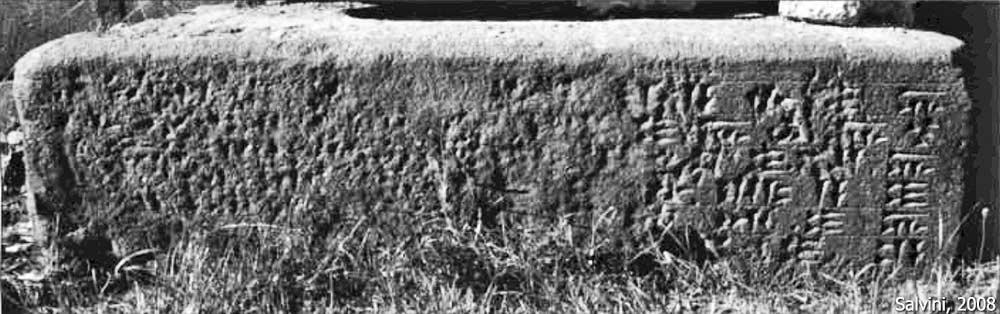
Transliteration:
1 dhal-di-i-ni-ni uš-ma-a-ši-i-ni
2 mmì-nu-a-še miš-pu-ú-i-ni-hi-ni-še
3 i-ni Ébar-zu-di-[i]-bi-i-du-ni
4 za-a-du-ú-ni mmì-nu-ú-a-i
5 Ébar-zu-di-i-bi-i-[du]-ni ti-i-ni
6 mmì-i-nu-ú-a-ni-i a-i-e
Translation:
“(1) Through the protection of the god Haldi, Minua, son of Išpuini, (3) made this barzudibiduni building. (4) ‘barzudibiduni of Minua’ is (its) name, (of?) the aie of Minua.”
References:
Lehmann-Haupt, C. F. 1928–1935. Corpus Inscriptionum Chaldicarum, Berlin-Leipzig (No. 81).
Salvini, M. 2008–2018. Corpus dei Testi Urartei, v. 1 pp. 246–247, v. 3 p. 172, v. 5 p. 165.
eCUT – Electronic Corpus of Urartian Texts (https://oracc.museum.upenn.edu/ecut/Q006961).
CTU A 5-63 = CICh 81 = HchI 55b = UKN 90 = KUKN 116
Image Sources:
M. Salvini, 2008
Old City of Van, Yedikilise and Dilkaya (A 5-65A–C)
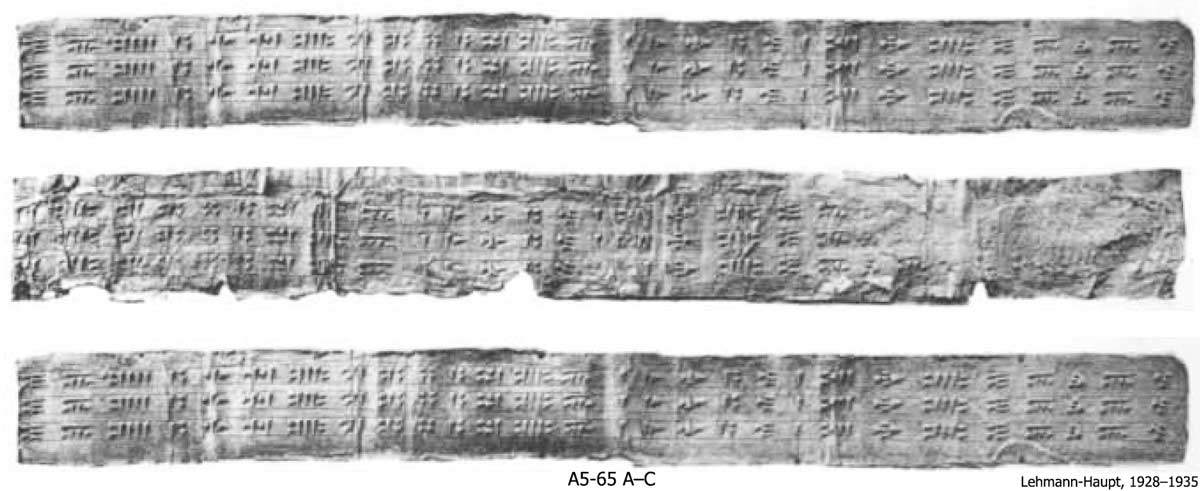
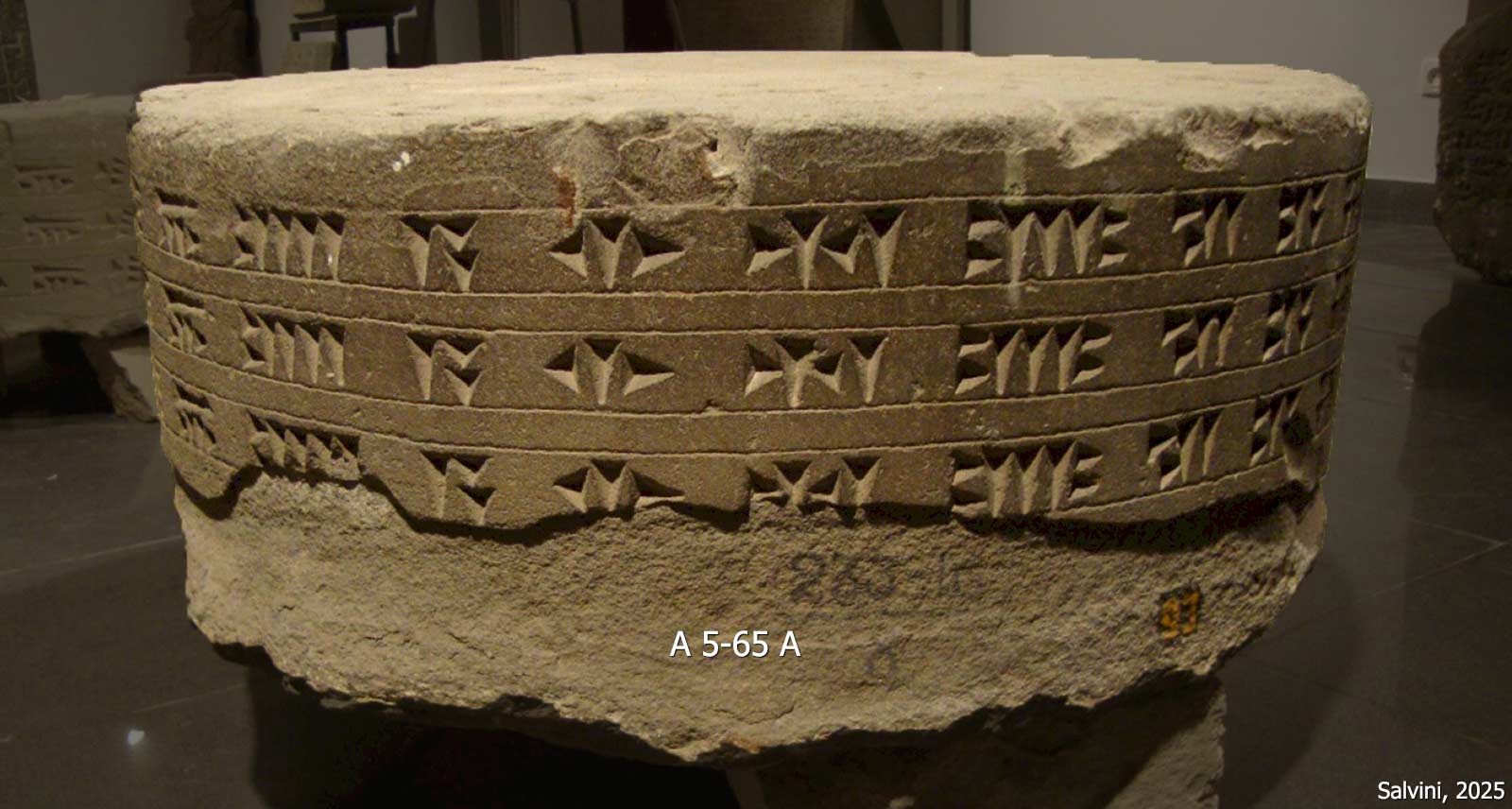
A single-line text by Minua concerning the construction of an ašihusi-building is known from three examples on cylindrical stones, likely column bases, all found in the 19th century at different locations. One (A) was found in the house of Ethem Ağa in the old city of Van. It measures 73.5 cm in diameter and 29 cm in height. Another (B) was found in the Varagvank/Yedikilise monastery on the slopes of Erek Dağ, southeast of Van. It measures 72 cm in diameter and 16 cm in height. A fragmentary third stone (C) was seen and copied in the Hurkum church (today Dilkaya). The first two (A and B) were transferred to Tbilisi and are now in the Georgian Museum, while the third (C) has disappeared. The inscriptions on A and B are identical, while C has a minor spelling variation. The meaning of the ašihusi-building remains unclear.
Transliteration:
A
1 mmì-nu-a-še miš-pu-ú-i-ni-hi-ni-še i-ni Éa-ši-hu-ú-si-e za-a-du-ú-ni
2 mmì-nu-a-še miš-pu-ú-i-ni-hi-ni-še i-ni Éa-ši-hu-ú-si-e za-a-du-ú-ni
3 mmì-nu-a-še miš-pu-ú-i-ni-hi-ni-še i-ni Éa-ši-hu-ú-si-e za-a-du-ú-ni
B
1 mmì-nu-a-še miš-pu-ú-i-ni-⸢hi⸣[-ni-še i-ni Éa]-ši-hu-ú-si-e za-a-du-ú-ni
2 mmì-nu-a-še miš-pu-ú-i-ni-hi-[ni-še i-ni É]a-ši-hu-ú-si-e za-a-du-ú-ni
3 mmì-nu-a-še miš-pu-ú-i-ni-hi-ni-še i-[ni] ⸢Éa-⸣ši-[hu]⸢-ú⸣-si-e za-a-du-ú-ni
C
1 [mmì-nu]-a-še miš-pu-ú-i-ni-e-[hi]-ni-še i-ni Éa-ši-hu-[ú-si-e za-a-du-ú-ni]
2 [mmì-nu-a]-še miš-pu-ú-i-ni-e-hi-ni-še i-ni Éa-ši-⸢hu⸣[-ú-si-e za-a-du-ú-ni]
3 [mmì-nu-a-še miš-pu-ú-i-ni-e-hi-ni-še i-ni Éa-ši-hu-ú-si-e za-a-du-ú-ni]
Translation:
“Minua, son of Išpuini, made this banquet hall(?).”
References:
Lehmann-Haupt, C. F. 1928–1935. Corpus Inscriptionum Chaldicarum, Berlin-Leipzig (Nos. 75, 76, 78).
Salvini, M. 2008–2018. Corpus dei Testi Urartei, v. 1 pp. 247–248, v. 3 p. 172, v. 5 pp. 166–167.
Salvini, M. 2025. “Written Documents of Ṭušpa,” in Ṭušpa: the Capital of Urartu, eds. E. Konyar & B. Genç, CHANE 143, Leiden, pp. 114–211 (158).
eCUT – Electronic Corpus of Urartian Texts (https://oracc.museum.upenn.edu/ecut/Q006963).
CTU A 5-65A–C = CICh 76, 75, 78 = HchI 54b,a,c = UKN 84, 83, 86 = KUKN 109, 108, 111
Image Sources:
C. F. Lehmann-Haupt, 1928–1935
M. Salvini, 2025
Yedikilise (A 5-73)
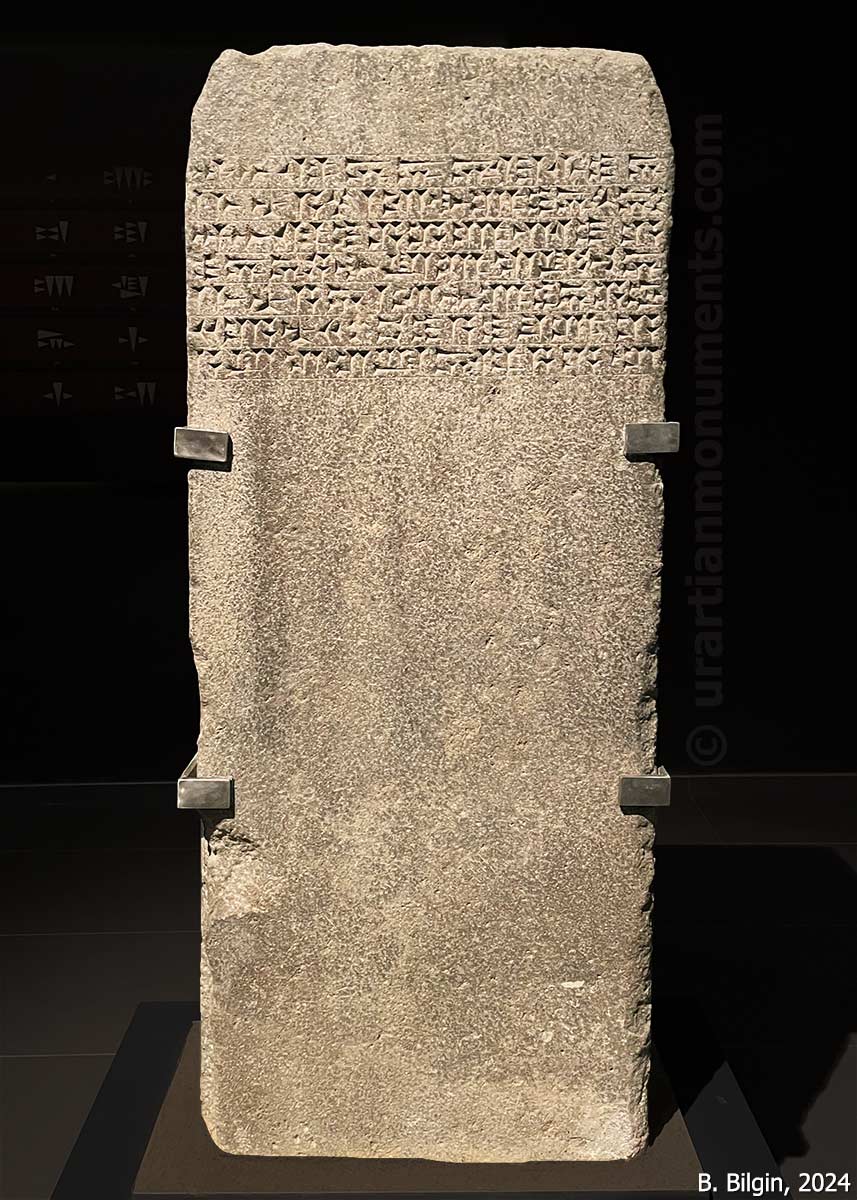
The inscribed basalt stele was first copied by F. E. Schulz in the late 1820s in the Varag (Warrak) monastery at Yedikilise. It measures 105 cm in height, 64 cm in width, and 32 cm in thickness and is on display in the Van Museum. The back was reworked to convert it into a tombstone.
Transliteration:
1 dhal-di-ni-ni uš-ma-ši-i-ni
2 mmì-nu-a-še miš-pu-ú-i-ni-hi-ni-še
3 dhal-di-i-e e-ú-ri-i-e
4 i-ni NA4pu-lu-ú-si ku-gu-ni
5 mmì-nu-a-ni miš-pu-ú-i-ni-e-hé
6 MAN DAN-NU MAN KURbi-i-a-i-na-ú-e
7 a-lu-si URUṭu-uš-pa-a-e URU
Translation:
“(1) Through the protection of the god Haldi, Minua, son of Išpuini, (3) erected this stele for the god Haldi, his (or: the) Lord. (5) (I am) Minua, son of Išpuini, strong king, king of the Bia lands, (7) lord of Ṭušpa-City.”
References:
Salvini, M. 2008–2018. Corpus dei Testi Urartei, v. 1 p. 252, v. 3 p. 177, v. 5 p. 171.
eCUT – Electronic Corpus of Urartian Texts (https://oracc.museum.upenn.edu/ecut/Q006971).
CTU A 5-73 = CICh 90(=97) = HchI 64 = UKN 102(=109) = KUKN 127
Image Sources:
Bora Bilgin, 2024
Yedikilise (A 5-81)
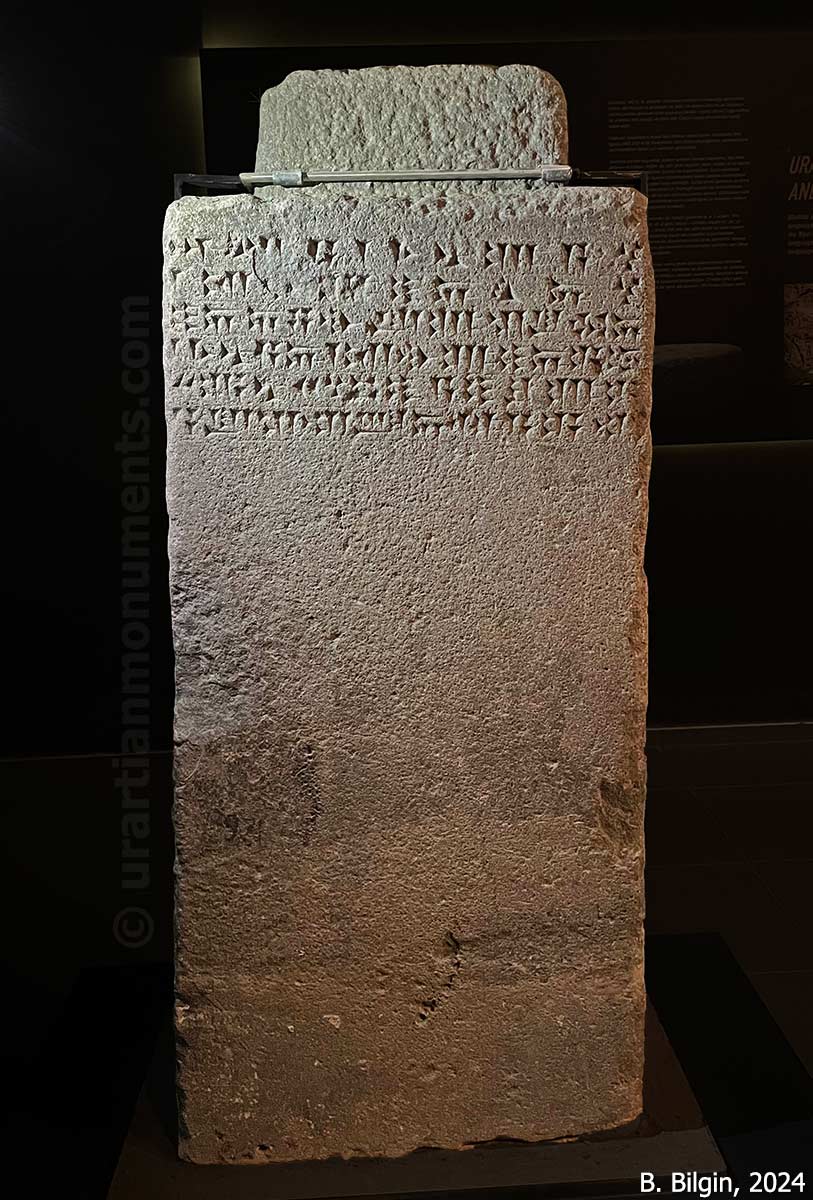
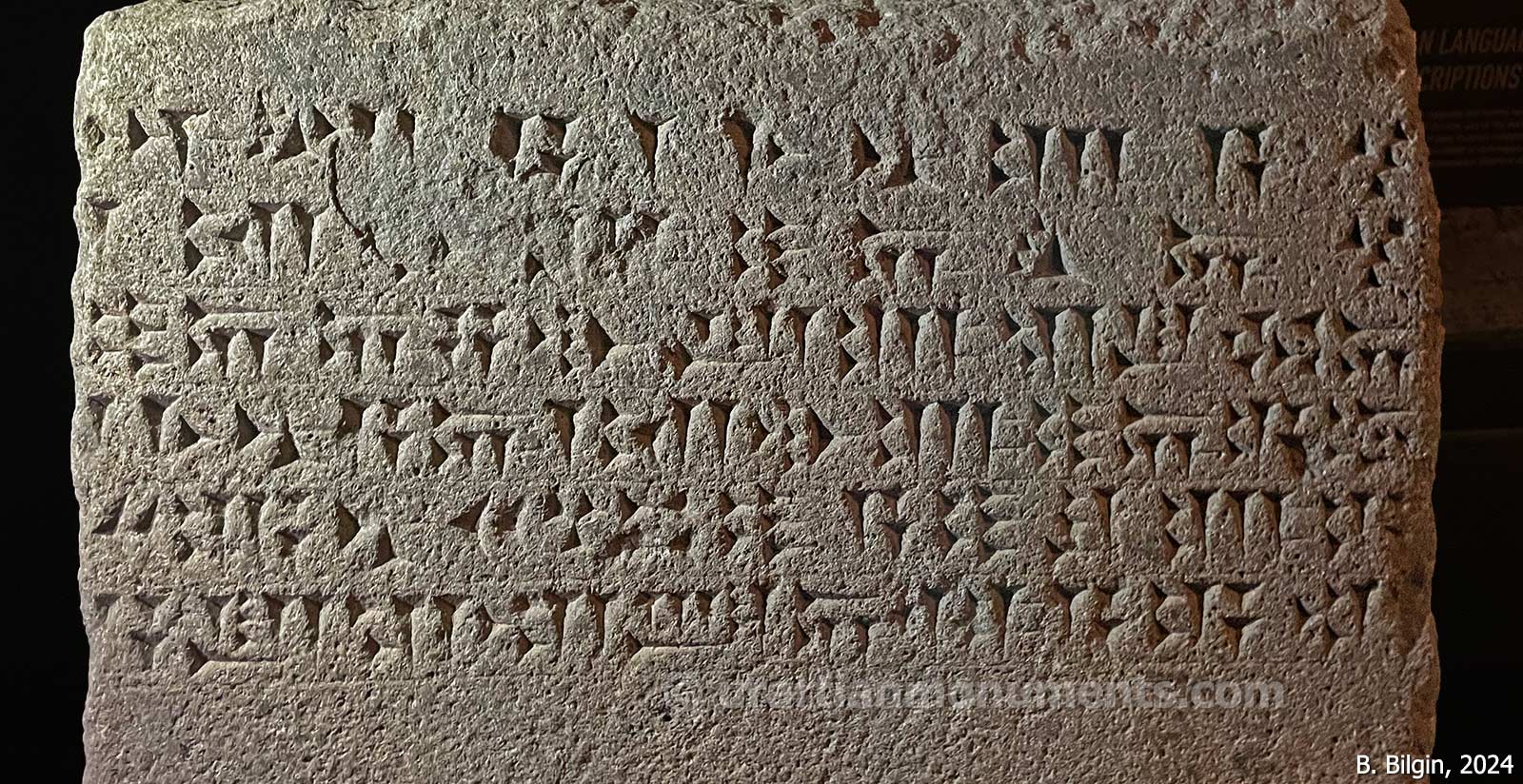
The deformed basalt stele was first copied by F. E. Schulz in the late 1820s, reused as an altar in the Surp Nshan church of the monastery at Yedikilise, southeast of Van. It measures 111 cm in height, 63.5 cm in width, and 32 cm in depth and is now on display in the Van Museum. The six-line inscription is a dedication to the Storm God.
Transliteration:
1 dIM-a mmì-nu-ú-a-še
2 miš-⸢pu⸣-ú-i-ni-hi-ni-še
3 i-ni NA4pu-lu-ú-si ku-gu-ni
4 mmì-nu-a-ni miš-pu-ú-i-ni-e-hé
5 MAN DAN-NU MAN KURbi-i-a-i-na-ú-e
6 a-lu-si URUṭu-uš-pa-a-e URU
Translation:
“(1) Minua, son of Išpuini, erected this stele for the Weather-God. (4) (I am) Minua, son of Išpuini, (5) strong king, king of the Bia lands, (6) lord of Ṭušpa-City.”
References:
Lehmann-Haupt, C. F. 1928–1935. Corpus Inscriptionum Chaldicarum, Berlin-Leipzig (No. 91).
Salvini, M. 2008–2018. Corpus dei Testi Urartei, v. 1 pp. 257–258, v. 3 p. 182, v. 5 pp. 175–176.
eCUT – Electronic Corpus of Urartian Texts (https://oracc.museum.upenn.edu/ecut/Q006979).
CTU A 5-81 = CICh 91 = HchI 65 = UKN 103 = KUKN 128
Image Sources:
Bora Bilgin, 2024