➥ Aznavurtepe and Patnos Inscriptions
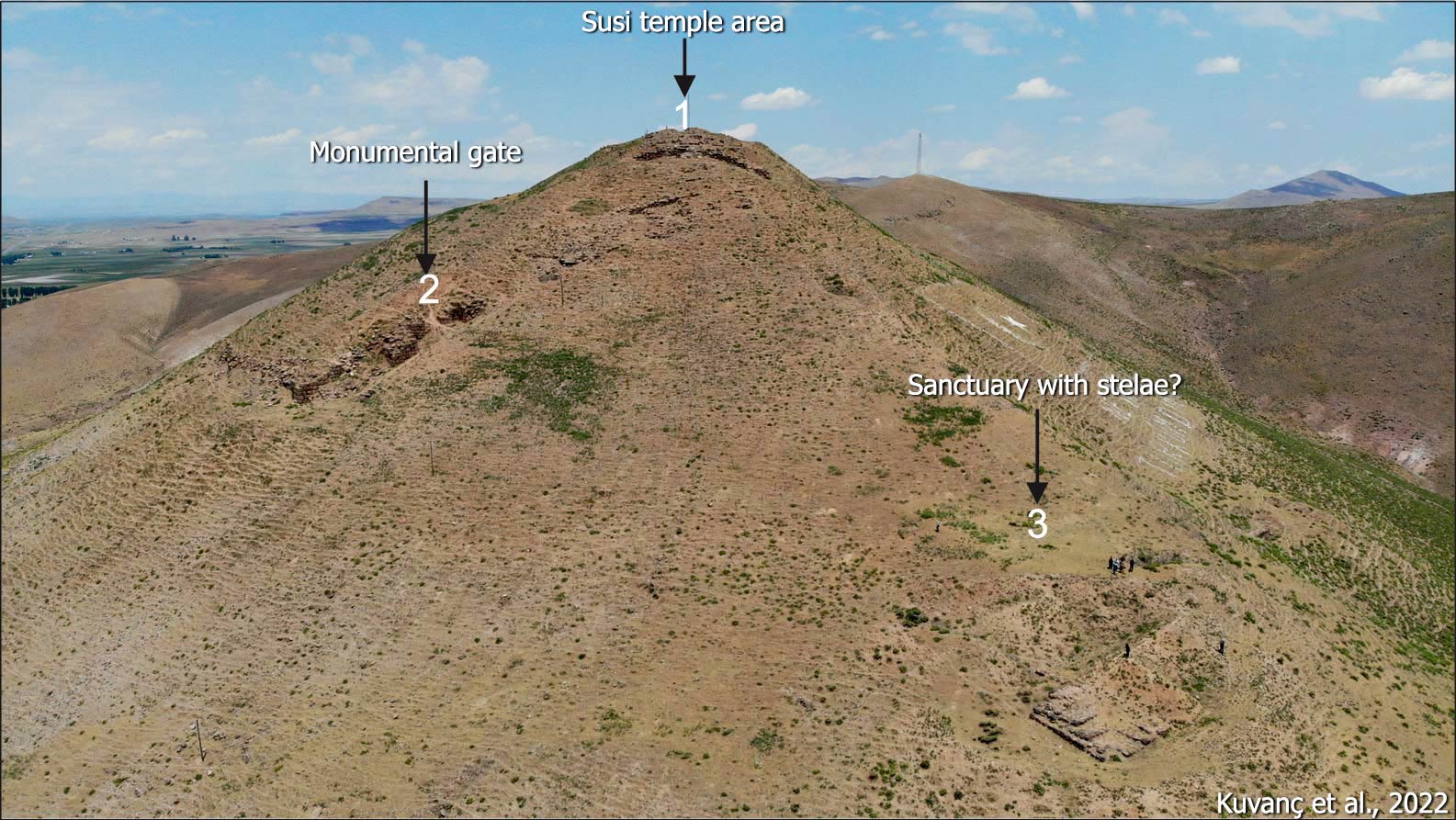
Aznavurtepe is a Urartian fortress located in the northeast of the fertile Patnos Plain, about 50 km north of Lake Van. It was establised on top of a hill about 200 meters above the plain, around 2 km north of the Patnos town center. It is thought that the name “Aludiri,” mentioned in the inscription found on the temple wall, refers to Aznavurtepe.
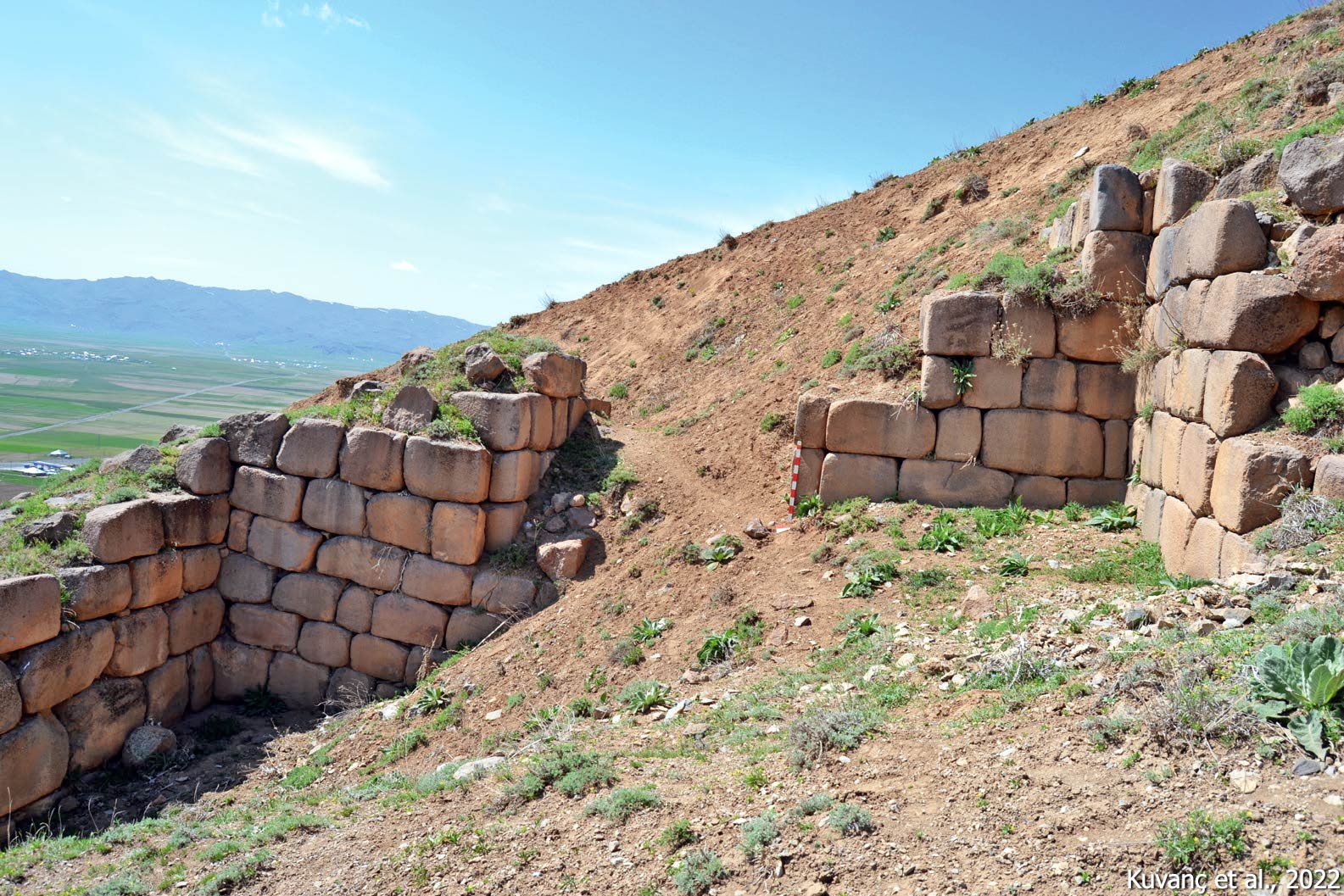
The first surface survey of the site was conducted by C. A. Burney and G. R. J. Lawson. They identified fortification walls surrounding both the fortress at the top of the hill and the lower city spread across its eastern, western, and southern slopes. The walls of the lower city are about 4 meters thick, with towers placed almost every 18 meters.
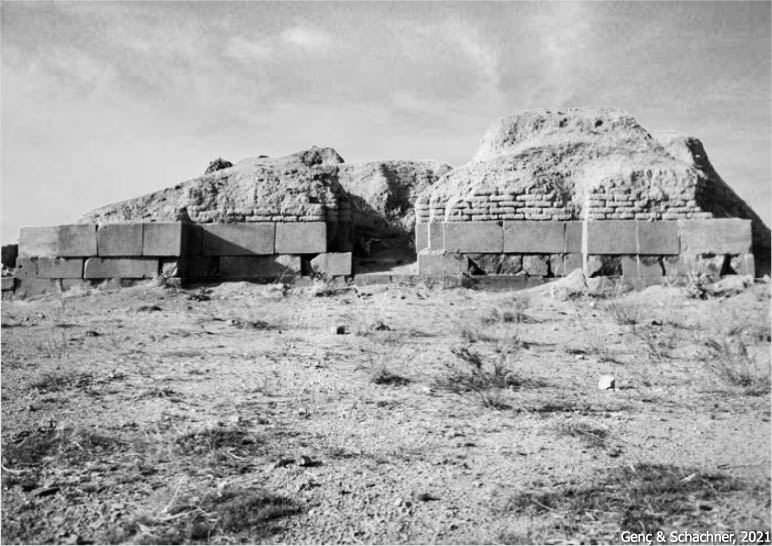
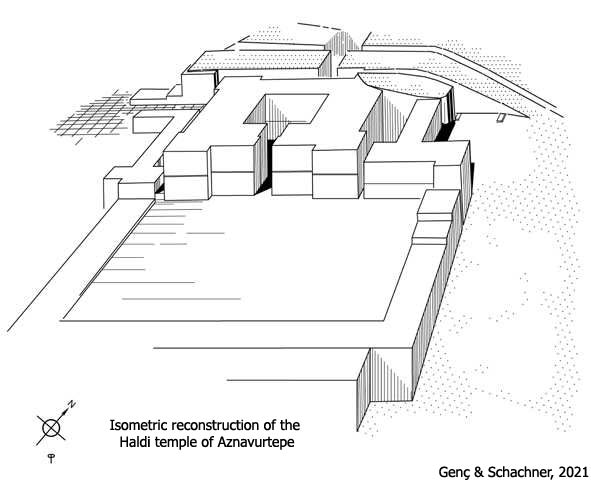
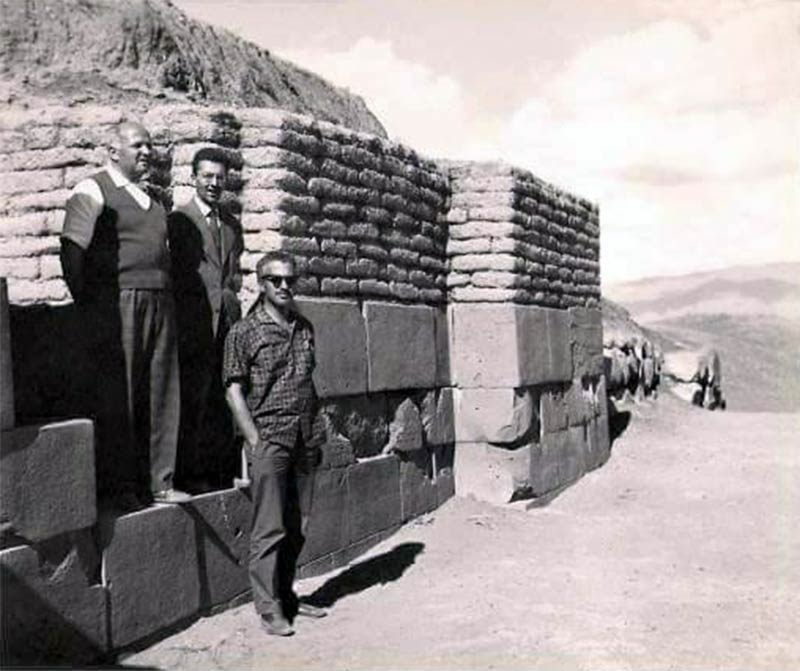
The only official excavations at Aznavur Fortress were carried out by Kemal Balkan between 1961 and 1963. These excavations revealed a square-planned, classical Urartian temple that had been heavily damaged by treasure hunters in earlier times. In front of the temple lies a rectangular courtyard. In addition, a large number of objects believed to have been dedicated to the temple were found in a nearby room. An inscription found near this room states that this “ašihusi” building was commissioned by King Argišti I. The exact function of the “ašihusi” buildings—also identified at the Ayanis and Kef fortresses—is still debated among researchers.
An inscription (A 2‑10) found in the wall of a church in Patnos at the end of the 19th century led scholars to speculate that the temple at Aznavurtepe may have been founded by the Urartian King Išpuini. However, it is uncertain whether the inscription actually originated from Aznavurtepe. In contrast, the inscriptions discovered during Kemal Balkan’s excavations at the temple belong to King Minua, Išpuini’s son. Regardless, the temple at Aznavurtepe is considered one of the oldest known examples of Urartian religious architecture.
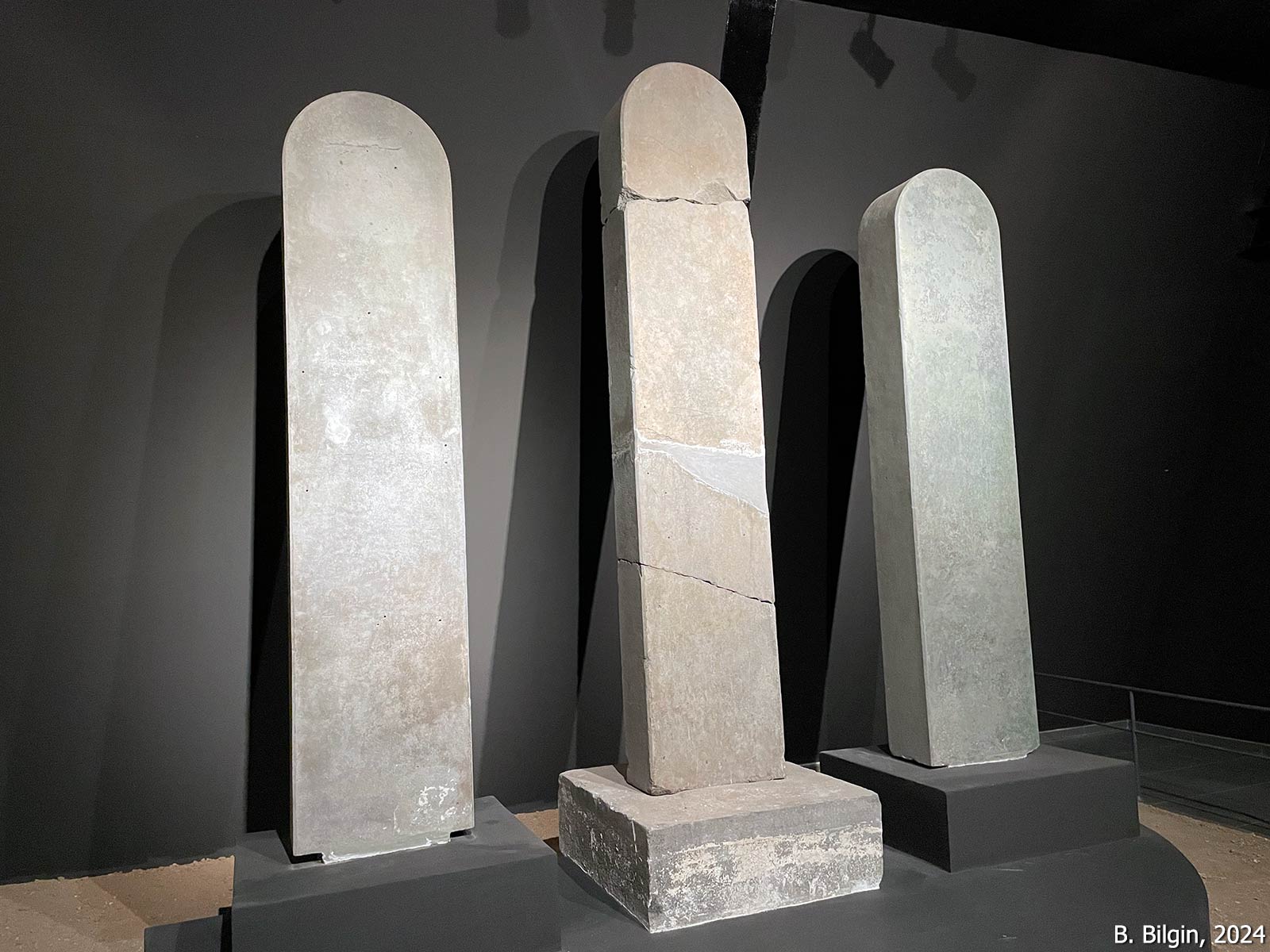
Another important monument found at Aznavurtepe is a set of stone stelae thought to belong to an open-air temple. Three stone stelae and one base were accidentally discovered in 1990 on the southern slope of the hill. These stelae, similar examples of which have been found at Altıntepe and Kayalıdere, are thought to represent the deities of the Urartian pantheon. The Aznavurtepe stelae are currently on display at the Van Museum.
References:
Balkan, K. 1960. “Patnos Yakınında Anzavurtepe’de Bulunan Urartu Tapınağı ve Kitabeleri,” Anatolia 5, 133–158.
Balkan, K. 1964. “Patnosta Keşfedilen Urartu Tapınağı ve Urartu Sarayı,” Atatürk Konferansları I, 235–243.
Burney, C. A. & G. R. J. Lawson. 1960. “Measured Plans of Urartian Fortresses,” Anatolian Studies X, 177–196.
Genç, B. & A. Schachner. 2021. “The Architecture of the Urartian Fortress of Aznavurtepe / URUaludiri near Patnos,” Istanbuler Mitteilungen 71, 71–88.
Işık, K. 2008. Patnos ve Çevresinin Erken ve Orta Demir Çağ Yerleşim Dokusu, Yayınlanmamış Yüksek Lisans Tezi, Yüzüncü Yıl Üniversitesi, Van.
Kuvanç, R., K. Işık, B. Genç & E. Konyar. 2022. “Urartian Cult of the Stelae and New Discoveries at Aznavurtepe and Yeşilalıç (Ashotakert),” JANER 22, 55–88.
Uysal, B. 2007. “Patnos’da Açığa Çıkarılan Urartu Stelleri,” Belleten 71/260, 5–18.
Images:
B. Genç & A. Schachner, 2021
R. Kuvanç et al., 2022
Bora Bilgin, 2024