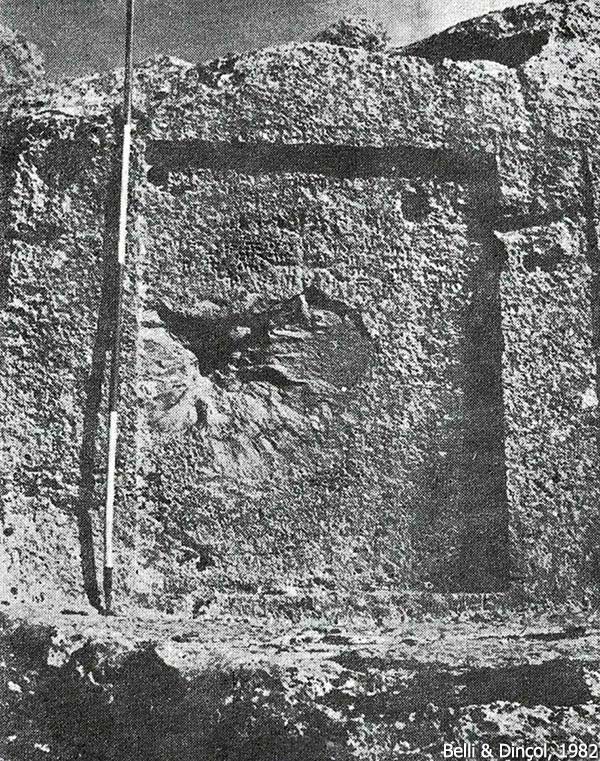
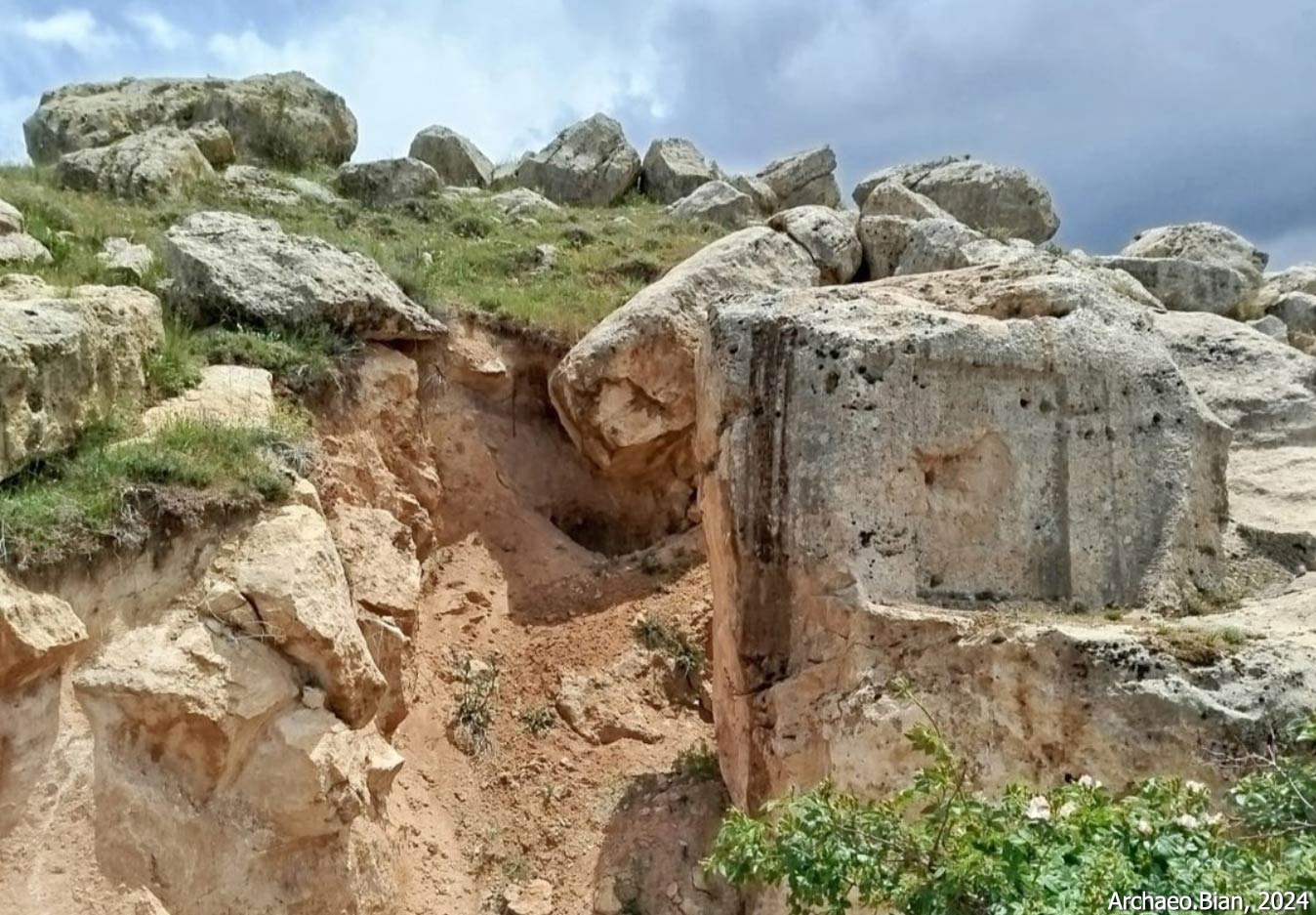
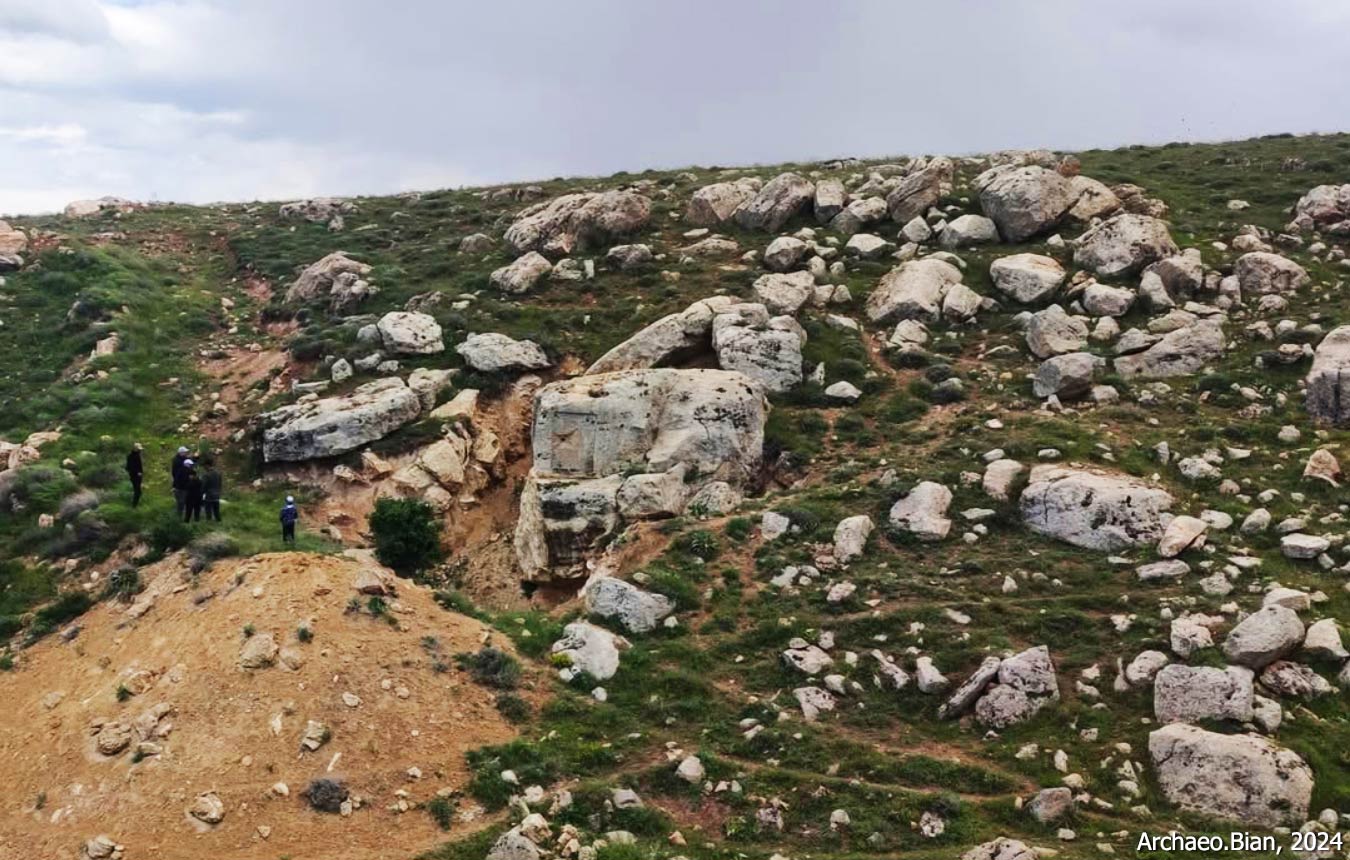
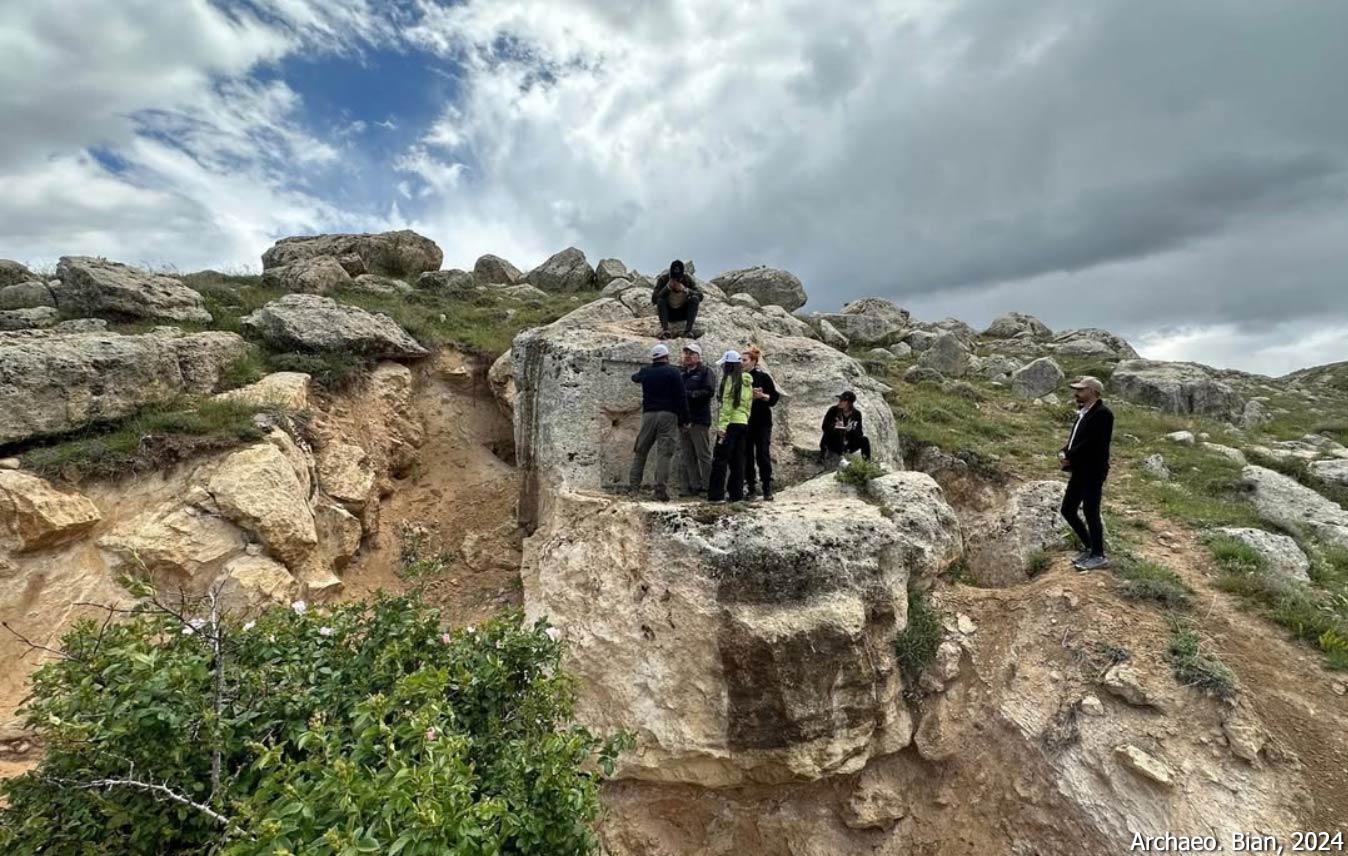
Hazine Piri Kapısı (Hazine Piri Gate) is a rock niche situated to the south of the village of Elmalık (formerly called Zivistan), 11 kilometers southeast of Van city center as the crow flies, along the Edremit road. Due to local legends claiming that a treasure is hidden behind it, the local people have named it Hazine Piri Kapısı (Master of Treasure Gate).
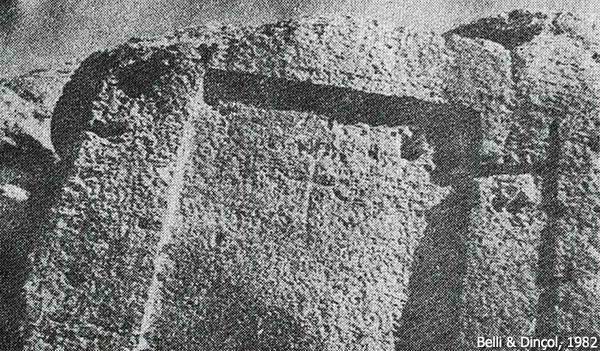
A four-line cuneiform inscription (A 2‑5) on it states that the vineyard and fruit orchard located here were established by King Ispuini in the name of the “lord”. The monument is dated to the early period of Ispuini’s reign, around 830–820 BCE. Fruit orchards in the area still exist today. In fact, the nearby village of Elmalık (apple orchard) is said to have taken its name from this historical association.
Some researchers suggest that the Hazine Piri Gate might have been constructed as an open-air cult site, similar to the Meher Kapı or Yeşilalıç Kapı. However, the inscription on it does not contain any reference to sacrificial offerings to the gods. Moreover, no stela sockets have been found around it, like those at the Yeşilalıç Kapı monument. Nor is there any structure nearby that resembles the so-called ‘votive niche’ near the Meher Kapı monument.
On the other hand, certain architectural features—such as the fact that one face of the rock was cut and smoothed to form a niche measuring 1.68 x 1.53 meters, that the niche is framed, and that a platform was created in front of it by flattening the rock—suggest that it may have served a purpose beyond that of an ordinary garden inscription. For this reason, it has been proposed that it could belong to an earlier period than the Meher Kapı and Yeşilalıç Kapı monuments and may represent an early example of such cult structures.
The inscription also does not mention Haldi, the supreme god of the Urartian pantheon. Instead, it uses the term “euri-,” meaning “lord, master, ruler.” Since Haldi is believed to have been incorporated as the chief god of the Urartian pantheon during the reign of King Ispuini, it is suggested that the Hazine Piri monument may date to an earlier phase of Ispuini’s rule—and that the title “lord” may have referred to Teisheba/Teshub instead of Haldi.
To the north and northeast of the Hazine Piri Gate are two separate Urartian fortresses: the Lower and Upper Zivistan fortresses. The larger Upper Zivistan Fortress is thought to have controlled the road leading south from the capital, while the smaller Lower Zivistan Fortress is believed to have supervised the stone quarries operating in the area.
References:
Batmaz, A. 2009. “Urartu Anıtsal Kaya Nişlerinin Olası Kaynakları,” in Yukarı Denizin Kıyısında Urartu Krallığı’na Adanmış Bir Hayat (Fs A. Çilingiroğlu), eds. H. Sağlamtimur et al., İstanbul, 151–161.
Belli, O. 2000. “Van Bölgesi’nde Urartu Krallığı’na Ait Çivi Yazılı Anıtsal Kaya Kapıları,” in Türkiye Arkeolojisi ve İstanbul Üniversitesi (1932–1999), ed. O. Belli, Ankara, 386–393.
Belli, O. & A. M. Dinçol. 1982. “Hazine Piri Kapısı ve Aşağı Zivistan Taş Ocakları (Die Inschrift von Hazine Piri Kapısı und die Steinbrüche um der Burg von Nieder-Ziwistan),” Anadolu Araştırmaları 8, 169–181.
Images:
O. Belli & A. Dinçol, 1982
Archaeo.Bian, 2024